It’s tempting to skip straight to bulk production, especially when you’re excited about a new design and want it in customers’ hands as fast as possible. But rushing past the prototype sampling stage is one of the most common and costly mistakes new clothing brands make. What feels like saving time upfront often turns into far bigger expenses down the line, from wasted fabric to entire batches that don’t fit properly.
Let’s look at why prototype sampling deserves a proper place in your production timeline, not just a quick afterthought.
What prototype sampling actually involves
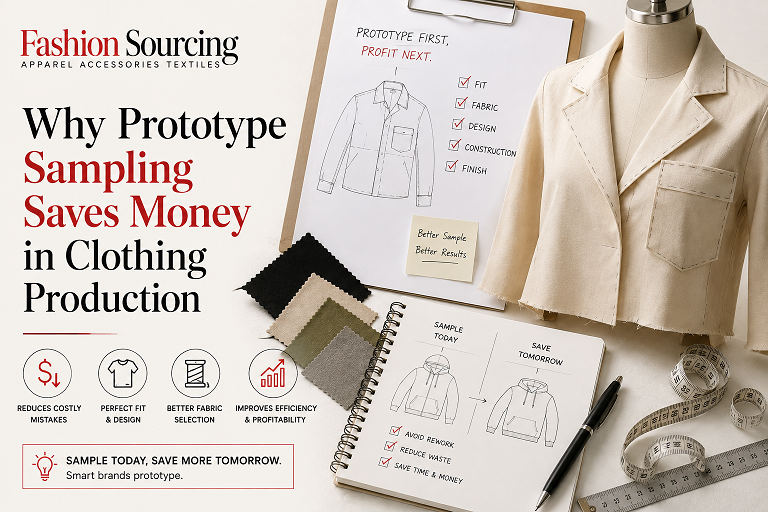
A prototype sample is essentially the first physical version of your design, made before any bulk cutting or sewing begins. It takes your sketches, measurements, and tech pack details and turns them into a real, wearable garment that you can inspect, try on, and adjust. This stage usually goes through a few rounds of revisions before a design gets approved for mass production.
Where prototype sampling actually saves money
- It catches fit issues early, before hundreds of units are cut in the wrong proportions
- It reveals fabric behavior, like shrinkage or stretch, that photos and swatches can’t fully predict
- It highlights construction problems, such as weak seams or awkward stitching lines, while changes are still cheap to make
- It confirms your tech pack is accurate, reducing the chances of miscommunication during bulk production
- It gives you a chance to test different fabric or trim options without committing to a large order
Each of these checkpoints prevents a mistake from multiplying across an entire production run, which is where the real financial risk lies.
The real cost of skipping this step
Imagine approving a design based on a flat sketch, only to receive 500 units with a fit that doesn’t sit right on the body. At that point, your options are limited and expensive: reworking every unit, discounting products that don’t sell well, or scrapping the batch entirely. None of these outcomes are cheap, and all of them are avoidable with a proper sampling process.
Beyond direct costs, skipping sampling can also delay your launch. Fixing errors after bulk production takes far longer than adjusting a single prototype, which means missed sales windows and frustrated customers waiting on delayed shipments.
How many sampling rounds you should expect
It’s normal to go through two or three rounds of samples before a design is fully approved. The first sample usually reveals major fit or construction issues. Later rounds fine-tune smaller details, like stitching precision or fabric drape. While this can feel slow if you’re eager to launch, each round significantly lowers your risk once bulk production begins.
Getting the most out of your sampling stage
- Try samples on real body types, not just a mannequin, whenever possible
- Take detailed notes and photos during each round to track exactly what needs adjusting
- Confirm fabric and trim details match what you’ll actually use in bulk production
- Don’t approve a sample just to save time if something still feels off
Working with a manufacturer that takes sampling seriously makes this entire process smoother. If you’re not sure where to start, a sourcing platform like Fashion Sourcing can connect you with manufacturers experienced in sample development, rather than factories that rush straight to bulk orders.
At the end of the day, prototype sampling might feel like an extra step slowing you down, but it’s really an investment that protects your budget, your timeline, and your brand’s reputation once products reach customers.