Importing apparel into the USA can be a good opportunity for clothing brands, fashion startups, wholesalers, and retailers. However, before shipping garments from another country, importers need to prepare the right documents. These papers help U.S. Customs and Border Protection (CBP) check the shipment, confirm its value and origin, and make sure the clothing follows U.S. import rules.
Whether you are importing T-shirts, jeans, hoodies, dresses, jackets, or other fashion products, understanding the required apparel import documents can help you avoid delays, extra costs, and problems at customs.
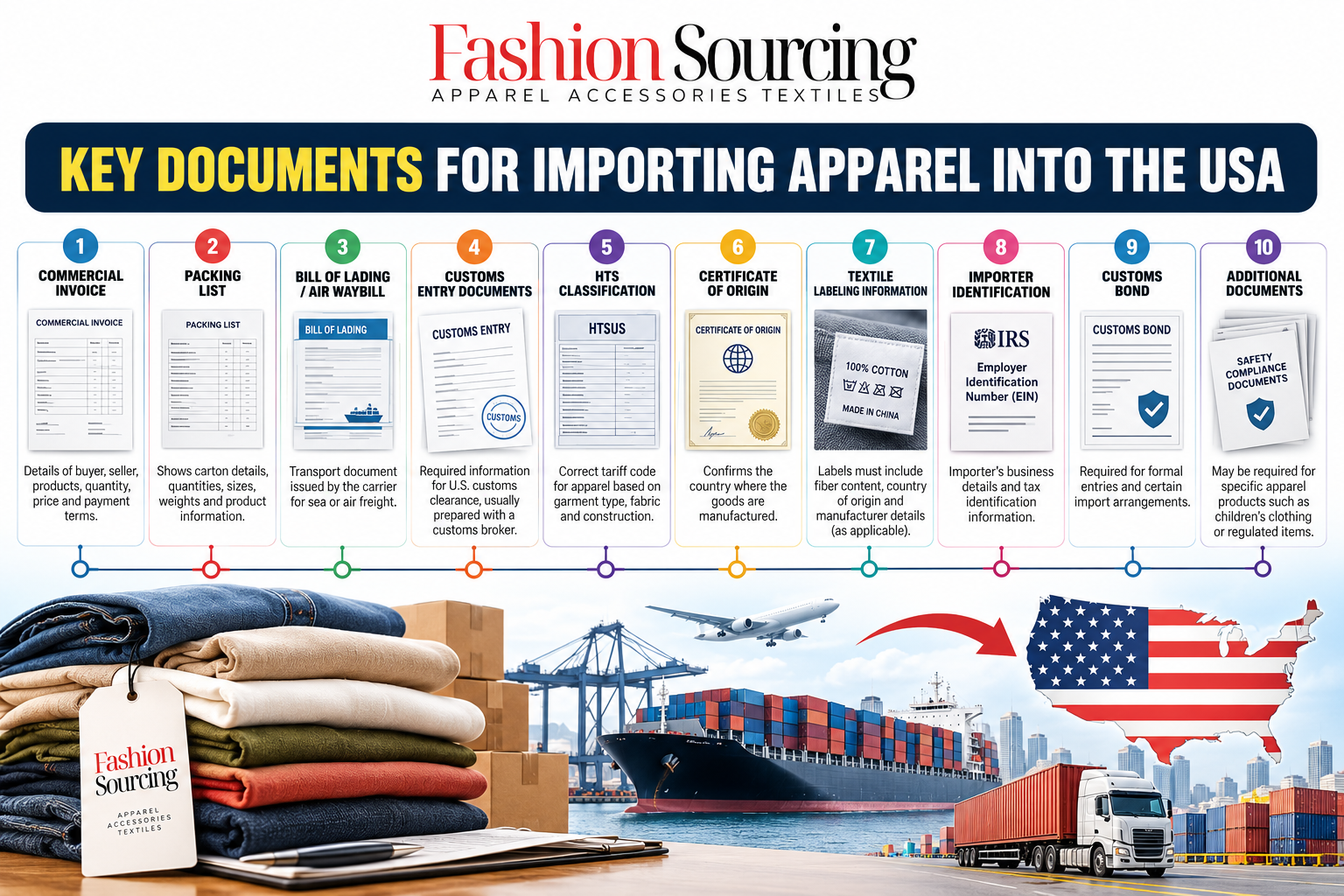
Essential Documents for Importing Apparel into the USA
1. Commercial Invoice
A commercial invoice is one of the most important documents when importing clothing into the USA. It is prepared by the seller or manufacturer and provides details about the shipment. It usually includes the seller’s and buyer’s names, product descriptions, quantities, prices, currency, country of origin, and payment terms. Customs officials use this information to help determine the shipment’s value and applicable duties.
2. Packing List
A packing list explains how the apparel shipment is packed. It includes the number of cartons, the quantity of garments in each carton, product types, sizes, and package weights. A clear packing list helps customs officers and warehouse teams check the shipment against the shipping documents.
3. Bill of Lading or Air Waybill
The bill of lading is commonly used for sea freight, while an air waybill is used for air freight. These transport documents provide shipment details and identify the parties involved in moving the goods. The carrier or freight forwarder generally issues the document.
4. Customs Entry Documents
Apparel importers must provide the information required to enter goods into the United States. This can include the customs entry filing, entry summary, and supporting shipment details. A licensed customs broker can help prepare and submit the required information. The exact filing requirements depend on the shipment and the import arrangement.
5. HTS Classification and Duty Information
Every imported apparel product needs the correct classification under the Harmonized Tariff Schedule of the United States (HTSUS). Classification depends on factors such as garment type, fabric composition, construction, and intended use. The correct HTS code helps determine the applicable customs duty and any additional trade measures.
6. Country of Origin Information
Importers must provide accurate country of origin information. This generally refers to where the garment was manufactured or substantially transformed, rather than simply where it was shipped from. Manufacturers should provide reliable production details to support origin claims and help determine whether any special trade rules apply.
7. Textile Labeling Information
Most apparel sold in the USA must meet applicable labeling requirements. Depending on the product, labels generally need to identify fiber content, the country of origin, and the manufacturer or marketer’s identity. Many garments must also include care instructions under Federal Trade Commission rules. Importers should check these requirements before production and shipment.
8. Importer Identification and Customs Bond
Importers may need to provide an importer identification number and other business details for customs processing. Depending on the shipment, a customs bond may also be required to cover duties, taxes, and other charges. The appropriate bond and entry requirements depend on the type and value of the shipment.
A certificate of origin identifies the country where the goods originate. It may be requested by the buyer, customs authorities, or a trade agreement program. It is not automatically required for every apparel shipment, so importers should confirm whether one is needed for their products and shipping route.
10. Additional Documents for Special Apparel
Some clothing products may require additional documents or compliance checks. For example, children’s sleepwear and certain other products may be subject to specific flammability or product safety rules. Importers should check the requirements that apply to their exact products before shipping.
Before shipping clothing to the USA, make sure the commercial invoice, packing list, and transport documents contain matching information. Confirm the product’s fabric composition, correct HTS classification, declared value, and country of origin. Check garment labels before production is complete, and work with a qualified customs broker when needed.
Keeping these documents ready can make importing apparel into the USA easier and help your clothing business prepare for customs clearance.
Frequently Asked Questions
Question 1: What documents are required when importing apparel into the USA?
Answer: Common documents include a commercial invoice, packing list, bill of lading or air waybill, customs entry information, and product classification details. Depending on the shipment, importers may also need a customs bond, origin documents, and additional compliance records.
Question 2: Is a commercial invoice mandatory for importing clothing into the USA?
Answer: A commercial invoice or acceptable substitute is generally required for customs entry. It should provide an accurate description of the apparel, quantity, value, and other relevant details about the seller and shipment.
Question 3: What information should a clothing import invoice contain?
Answer: A clothing import invoice should include the buyer’s and seller’s details, garment descriptions, quantities, unit prices, total value, currency, country of origin, and applicable classification information. The information must accurately reflect the transaction.
Question 4: Do I need a packing list to import garments into the USA?
Answer: A packing list is commonly used to identify the number of cartons, garment quantities, sizes, weights, and package details. Customs authorities may request it, and it helps the importer, freight forwarder, and warehouse verify the shipment.
Question 5: What is an HTS code for imported apparel?
Answer: An HTS code is a tariff classification number used to identify imported products under the U.S. Harmonized Tariff Schedule. The correct classification depends on the garment’s type, fabric, construction, and other product details.
Question 6: Do I need a certificate of origin for clothing imports?
Answer: A certificate of origin may be required for specific customs procedures, buyer requirements, or preferential trade programs. Not every apparel shipment requires a separate certificate, but importers must provide accurate country of origin information.
Question 7: Are clothing labels required when importing apparel into the USA?
Answer: Most covered textile and wool apparel products must meet U.S. labeling rules. These generally include fiber content, country of origin, and the identity of the manufacturer or responsible business. Applicable care instructions may also be required.
Question 8: Do I need a customs broker to import clothing into the USA?
Answer: A customs broker can help prepare entry documents, classify apparel, calculate duties, and manage customs clearance. Using a broker is not mandatory for every shipment, but professional support can help new importers avoid common mistakes.
Question 9: What shipping documents are needed for apparel imports?
Answer: Sea shipments generally use a bill of lading, while air shipments use an air waybill. These documents work alongside the commercial invoice, packing list, and customs entry information to support shipment handling and clearance.
Question 10: Is a customs bond required for importing apparel into the USA?
Answer: A customs bond is generally required for formal entries and certain other import arrangements. The type of bond depends on the shipment and entry requirements. Importers should confirm the correct bond with their customs broker.
Question 11: Do I need an import license to import clothing into the USA?
Answer: There is no single general import license required for every ordinary clothing shipment. However, specific products, trade measures, or regulatory requirements may call for additional approvals or documents.
Question 12: How are import duties calculated on clothing?
Answer: Apparel import duties depend on factors such as the HTS classification, customs value, country of origin, and any applicable additional tariffs or trade measures. Importers should confirm the current duty treatment before placing an order.
Question 13: Can I import clothing from China into the USA?
Answer: Yes, clothing can be imported from China, provided the shipment meets applicable U.S. customs and regulatory requirements. Importers should carefully check the HTS classification, country of origin, labeling, and any additional tariffs or restrictions.
Question 14: What documents are needed to import clothing for an online store?
Answer: An online clothing business typically needs commercial invoices, packing lists, shipping documents, customs entry information, and accurate product classification and origin details. Garments must also comply with applicable labeling and safety rules.
Question 15: How can I avoid customs delays when importing apparel into the USA?
Answer: Prepare accurate documents before shipping, check that product descriptions and values match across records, confirm the correct HTS classification, and review labeling and origin requirements. Working with an experienced customs broker can also help reduce errors.
Stay updated on Fashion Sourcing, apparel manufacturing, and global supply chain trends:
Connect With Fashion Sourcing
- Instagram: @therealfashionsourcing
- Facebook: Fashion Sourcing
- Twitter/X: @therealfas19949
- LinkedIn: Fashion Sourcing
- Pinterest: Fashion Sourcing
- YouTube: @FashionSourcing-e5w
Visit fashion-sourcing.com for all sourcing and procurement needs.
For media & contact inquiries: hello@fashion-sourcing.com