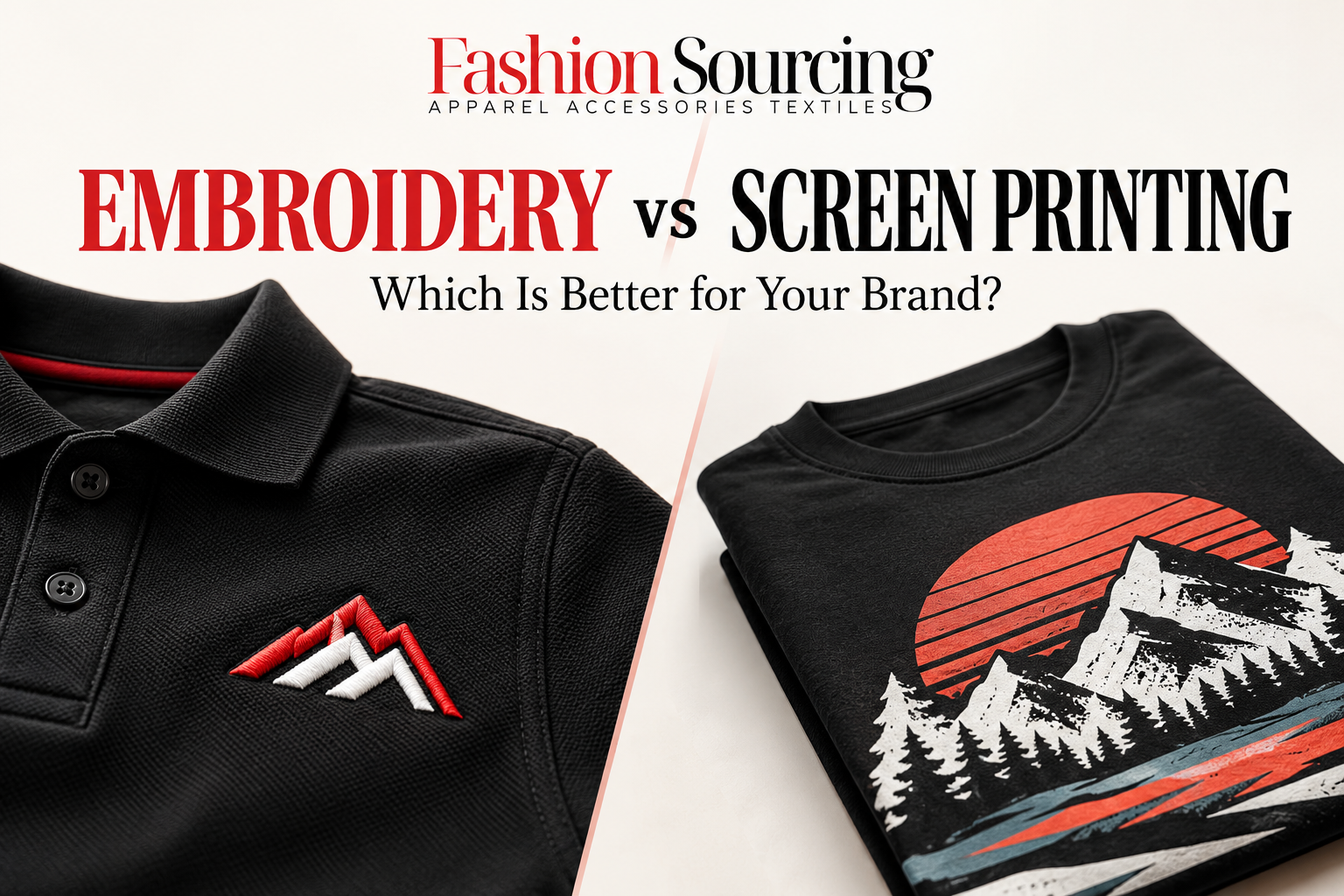
Choosing the right decoration method is an important step when creating custom clothing for your brand. Embroidery and screen printing are two popular ways to add logos, artwork, and designs to garments. Both methods can make clothing look professional, but they offer different results in terms of appearance, cost, comfort, and durability.
If you are planning to manufacture custom T-shirts, hoodies, polo shirts, uniforms, or promotional clothing, understanding the difference between embroidery and screen printing can help you make the right choice for your business.
What Is Embroidery in Clothing Manufacturing?
Embroidery is a process that uses thread and stitching to create a design directly on fabric. Instead of printing ink onto a garment, a sewing machine follows a digital design file to stitch a logo, name, or pattern into the material.
Embroidery is widely used for polo shirts, jackets, caps, sweatshirts, workwear, and premium clothing. It gives garments a raised, textured finish that can make a simple logo look more stylish and professional.
One of the biggest benefits of embroidery is its durability. High-quality embroidery can handle regular washing and daily use when the correct thread, fabric, and stitching methods are used. It is also a good choice for businesses that want a clean, long-lasting logo on their clothing.
However, embroidery may not be suitable for every design. Small details, very thin lines, and complex artwork can be difficult to reproduce with thread. It can also feel heavier on lightweight fabrics, and the cost may increase with large or detailed designs.
What Is Screen Printing?
Screen printing is a clothing decoration method that uses ink to transfer a design onto fabric through a prepared screen. Each ink color usually requires a separate screen, making the process especially useful for producing large quantities of garments with the same design.
This method is popular for custom T-shirts, graphic hoodies, streetwear, event merchandise, and promotional clothing. It can produce bright colors, bold graphics, and large designs that stand out.
A major advantage of screen printing is its value for bulk orders. Once the screens are prepared, printing many garments with the same design can become cost-effective. It also works well for creative artwork, slogans, and colorful brand designs.
The final result depends on the ink, fabric, printing process, and curing method. Poorly applied prints may crack, fade, or peel over time. Screen printing also requires proper setup, so small orders with many colors may cost more per garment.
Embroidery vs Screen Printing: Key Differences
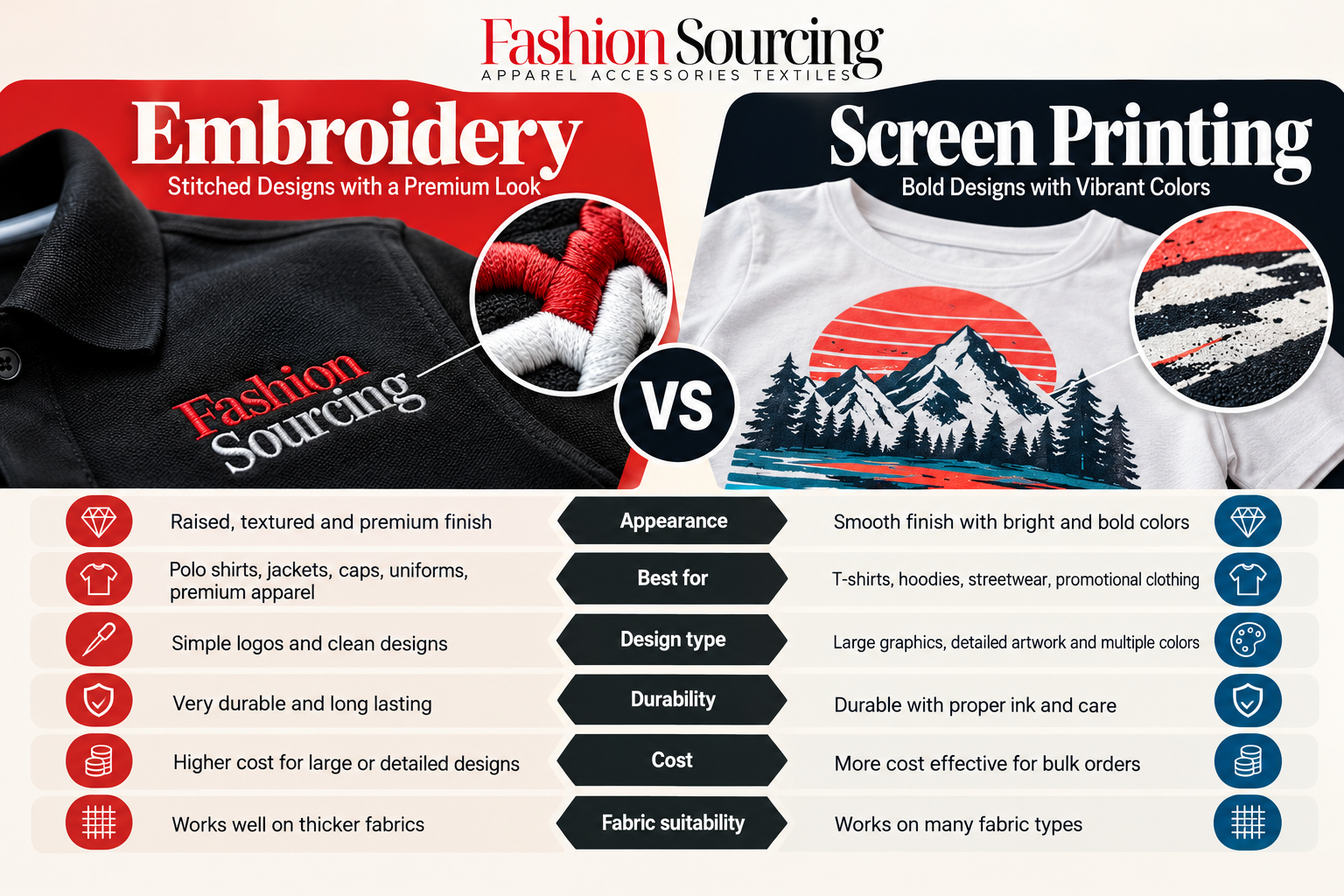
The main difference between embroidery and screen printing is how the design is added to the garment. Embroidery uses thread to create a stitched design, while screen printing applies ink to the fabric.
Embroidery is often preferred for premium logos, corporate uniforms, caps, and polo shirts. It creates a textured appearance that suits brands looking for a smart and professional image. Screen printing is usually better for large graphics, colorful artwork, promotional T-shirts, and streetwear collections.
Cost is another important factor. Embroidery pricing depends on stitch count, design size, thread colors, and setup requirements. Screen printing costs depend on the number of colors, screen preparation, print size, and order quantity.
Both methods can be durable when handled correctly. The best option depends on the garment material, artwork, intended use, and production budget.
Which Method Is Better for Your Clothing Brand?
The right choice depends on your brand identity and the type of products you want to sell. If you are building a premium clothing line, embroidery can help create a refined look for polo shirts, sweatshirts, jackets, and caps. It is particularly suitable for smaller logos and simple brand marks.
If your brand focuses on graphic T-shirts, bold streetwear, or colorful designs, screen printing may be the better option. It allows you to create large artwork and reproduce designs across many garments.
You do not have to choose only one method for your entire collection. Many clothing brands use embroidery for chest logos and screen printing for large back designs. This combination can create a distinctive look while keeping the garment suitable for its intended market.
Before making a final decision, consider your fabric, design, order quantity, target customer, and expected selling price. Request samples from your clothing manufacturer to compare the finish, comfort, and wash performance.
For businesses developing custom apparel, working with an experienced manufacturing partner can make the process easier. Fashion Sourcing helps brands explore clothing manufacturing options that match their designs, product needs, and brand goals.
Frequently Asked Questions
1. What is the main difference between embroidery and screen printing?
Answer: Embroidery uses thread to stitch a design into fabric, while screen printing applies ink to the garment. Embroidery creates a raised, textured finish, whereas screen printing produces a smooth printed design.
2. Is embroidery better than screen printing for clothing brands?
Answer: Embroidery is often better for brands that want a premium appearance on polo shirts, caps, jackets, and uniforms. Screen printing is usually more suitable for graphic T-shirts, colorful artwork, and large designs.
3. Which is more durable, embroidery or screen printing?
Answer: Embroidery is generally very durable because the design is stitched into the fabric. Screen printing can also last a long time when quality inks and correct curing methods are used. Washing and care affect both methods.
4. Is embroidery more expensive than screen printing?
Answer: Embroidery can cost more for large or detailed designs because it requires more stitches and production time. Screen printing is often more affordable for bulk orders, especially when the same design is printed on many garments.
5. Which printing method is best for custom T-shirts?
Answer: Screen printing is a popular choice for custom T-shirts with large graphics, slogans, and colorful artwork. Embroidery works well for small chest logos and simple designs on heavier T-shirts.
6. Is embroidery suitable for hoodies and sweatshirts?
Answer: Yes, embroidery works well on many hoodies and sweatshirts because their thicker fabric can support stitched designs. Small chest logos and sleeve details are common choices for embroidered hoodies.
7. Can screen printing be used on hoodies?
Answer: Yes, screen printing is widely used on hoodies for large front graphics, back artwork, and sleeve designs. The ink and curing process should suit the hoodie fabric to achieve a comfortable and lasting finish.
8. Which method is better for premium clothing brands?
Answer: Embroidery is often preferred for premium clothing because its raised texture can create a refined look. However, screen printing can also deliver a premium result when the artwork, ink, garment quality, and printing process are carefully selected.
9. Can embroidery reproduce detailed logos?
Answer: Embroidery can reproduce many logos, but very small text, thin lines, and complex details may lose clarity. Simplifying the design and choosing a suitable stitch size can help improve the final result.
10. Is screen printing suitable for colorful designs?
Answer: Yes, screen printing is suitable for bold and colorful designs. It can reproduce artwork, graphics, and brand visuals on different garments, although more colors may require additional setup and production costs.
11. Which method is better for bulk clothing orders?
Answer: Screen printing is often cost-effective for large orders with the same design because setup costs are spread across many garments. Embroidery can also work well for bulk orders, particularly when applying small logos to uniforms or branded apparel.
12. Does embroidered clothing feel uncomfortable?
Answer: Embroidery can feel slightly raised or stiff, especially when the design is large or placed on lightweight fabric. Choosing a suitable design size, fabric, and backing can improve comfort.
13. Does screen printing crack or fade after washing?
Answer: Screen printing can crack or fade if low-quality ink is used, the print is not cured correctly, or the garment is poorly cared for. Following the recommended washing instructions helps maintain the design.
14. Can a clothing brand combine embroidery and screen printing?
Answer: Yes, brands can combine both methods on the same garment. For example, a hoodie may feature an embroidered chest logo and a large screen-printed design on the back. This approach adds visual interest and supports different design needs.
15. How should I choose between embroidery and screen printing for my brand?
Answer: Consider your design, fabric, order quantity, budget, and target customer. Choose embroidery for textured logos and a premium finish, or screen printing for large graphics and colorful designs. Testing samples before full production helps you make a confident decision.
Stay updated on Fashion Sourcing, apparel manufacturing, and global supply chain trends:
Connect With Fashion Sourcing
- Instagram: @therealfashionsourcing
- Facebook: Fashion Sourcing
- Twitter/X: @therealfas19949
- LinkedIn: Fashion Sourcing
- Pinterest: Fashion Sourcing
- YouTube: @FashionSourcing-e5w
Visit fashion-sourcing.com for all sourcing and procurement needs.
For media & contact inquiries: hello@fashion-sourcing.com