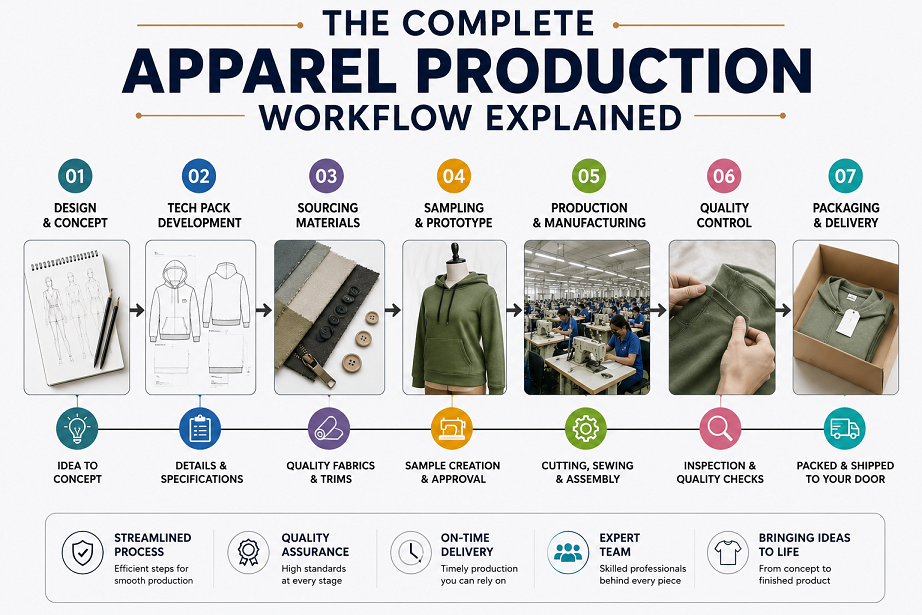
Behind every garment hanging on a retail rack or arriving in a customer’s doorstep is a complex, multi-stage production process that most consumers never see. For brand founders, designers, and entrepreneurs entering the fashion industry, understanding the full apparel production workflow is not just useful — it’s essential. Knowing how each stage connects to the next, where delays typically occur, and what decisions need to be made at each phase allows you to plan smarter, communicate more effectively with your manufacturing partners, and ultimately deliver better products on time. Here is a clear, end-to-end breakdown of how apparel production actually works.
Stage One — Design and Tech Pack Development
Every production run begins with a design concept that gets translated into a technical document known as a tech pack. A tech pack is the master blueprint for your garment — it includes flat sketches from all angles, detailed measurements and grading specs, fabric and trim specifications, colorway breakdowns, stitching instructions, label placement, and any special construction details. The more complete and precise your tech pack, the fewer errors and revision rounds you’ll experience during sampling. Factories rely on tech packs to price your styles accurately and produce samples that match your intent, so investing time in getting this document right before approaching any manufacturer is one of the highest-return activities in the entire production process.
Stage Two — Fabric and Trim Sourcing
Once your tech packs are ready, sourcing begins in parallel. This stage involves identifying and approving all the materials your garments require — main fabrics, lining fabrics, interfacings, threads, zippers, buttons, labels, hang tags, and packaging. Fabric sourcing alone can take six to twelve weeks for custom or specialty materials, which is why it needs to start as early as possible in your production calendar. Trim items like woven labels and branded hardware often have their own lead times that are separate from fabric orders. Strong Fashion Sourcing relationships are what allow brands to navigate this stage efficiently — experienced sourcing partners have established networks of vetted mills and suppliers that dramatically reduce the time and guesswork involved in finding quality materials at the right price points.
Stage Three — Sampling
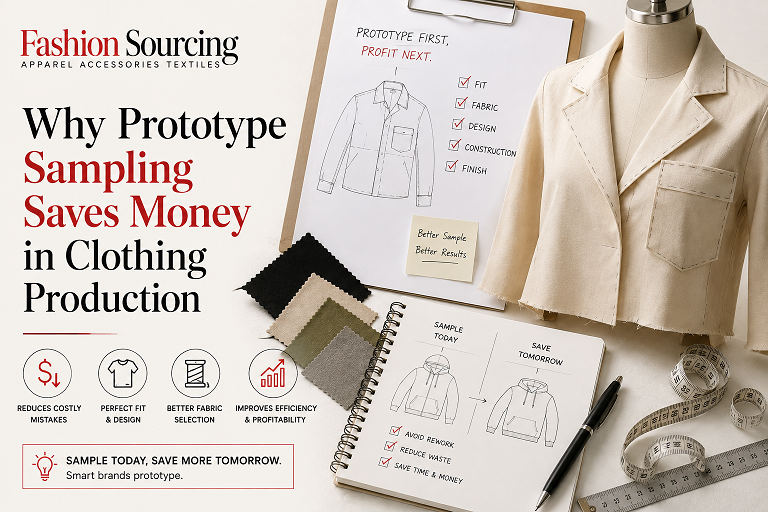
With approved materials in hand, the factory produces your first samples — known as proto samples or first samples. These initial versions rarely come back perfect. Fit issues, construction inconsistencies, and color discrepancies are common at this stage and are expected. Your job is to review each sample systematically, document every change needed with detailed comments and measurements, and send clear revision instructions back to the factory. Most styles go through two to three rounds of sampling before reaching a final approved sample (also called a gold seal sample) that becomes the official production standard. This stage is time-consuming but non-negotiable — approving a flawed sample to save time is one of the most expensive mistakes a brand can make.
Stage Four — Costing and Order Confirmation
Once your samples are approved, your factory will issue a final cost sheet based on confirmed materials, construction complexity, order quantities, and delivery requirements. This is the stage where you negotiate pricing, confirm minimum order quantities, agree on payment terms, and sign off on a formal purchase order. Understanding your cost of goods at this stage is critical for protecting your margins and setting retail prices that work across all your sales channels — whether you’re selling direct-to-consumer, through wholesale accounts, or via a B2B Ecommerce Clothing Platform USA that connects your brand with retail buyers at scale.
Stage Five — Bulk Production and Quality Control
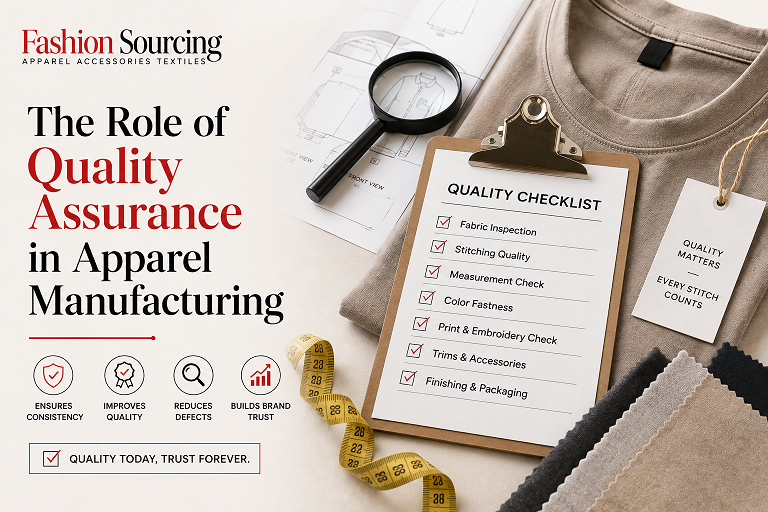
With the purchase order confirmed and all materials approved, bulk production begins. This is when your garments are cut, sewn, finished, and prepared for shipment at full volume. Quality control during this stage is critical. Reputable factories will conduct in-line inspections throughout the production run to catch issues before they multiply across hundreds or thousands of units. As a brand, you should also arrange for third-party quality inspections before shipment — particularly for your first few production runs with a new factory. These inspections check measurements, construction, color consistency, and overall finish against your approved gold seal sample.
Stage Six — Shipping, Delivery, and Sell-Through
The final stage of the apparel production workflow is getting your finished goods from the factory to your warehouse and ultimately to your customers. This involves coordinating freight forwarding, customs clearance, import duties, and last-mile logistics — all of which need to be planned well in advance of your target delivery date. Once your inventory arrives, the focus shifts to sell-through: activating your marketing plan, fulfilling orders, and analyzing which styles, colorways, and sizes are performing best. The data you collect during this phase directly informs the decisions you’ll make in your next production cycle, making sell-through analysis one of the most valuable steps in the entire workflow.
Understanding the apparel production workflow from start to finish gives you a significant advantage in an industry where timing, communication, and attention to detail determine which brands succeed and which ones struggle. Build the process right, and every collection becomes more efficient, more profitable, and more representative of the brand you’re working to build.
Stay updated on Fashion Sourcing, apparel manufacturing, and global supply chain trends:
Connect With Fashion Sourcing
- Instagram: @therealfashionsourcing
- Facebook: Fashion Sourcing
- Twitter/X: @therealfas19949
- LinkedIn: Fashion Sourcing
- Pinterest: Fashion Sourcing
- YouTube: @FashionSourcing-e5w
Visit www.fashion-sourcing.com for all sourcing and procurement needs.
For media & contact inquiries: hello@fashion-sourcing.com