Fabric shrinkage is an important factor to consider before starting clothing production. It happens when fabric becomes smaller after washing, drying, steaming, or other finishing processes. If fabric shrinkage is not checked before manufacturing, it can affect garment size, fit, quality, and the final look of clothing. For clothing brands, understanding fabric shrinkage helps reduce waste, control production costs, and deliver better products to customers.
Whether you are producing T-shirts, hoodies, jeans, dresses, or other garments, checking fabric shrinkage before bulk production is a key step in maintaining consistent quality.
What Is Fabric Shrinkage?
Fabric shrinkage refers to the reduction in the length or width of fabric after it is exposed to water, heat, washing, or steam. Some fabrics shrink more than others because of their fiber type, yarn structure, and manufacturing process.
For example, cotton fabric may shrink after its first wash, while polyester fabric usually has lower shrinkage under normal washing conditions. However, the actual result depends on the fabric quality, treatment, and finishing process.
Understanding fabric shrinkage before clothing production helps manufacturers choose the right fabric and plan garment sizes more accurately.
Why Does Fabric Shrink?
Fabric shrinkage can happen for several reasons. During fabric manufacturing, fibers and yarns may be stretched while the material is being knitted or woven. When the fabric comes into contact with water or heat, some of this tension is released, causing the material to become smaller.
The main causes of fabric shrinkage include washing, high drying temperatures, steam treatment, and poor fabric finishing. Some natural fibers, such as cotton and wool, can also react more strongly to moisture and heat.
Different fabrics behave differently, so clothing manufacturers should test each fabric before starting large production orders.
Common Types of Fabric Shrinkage
There are two main types of fabric shrinkage that manufacturers should understand.
Lengthwise shrinkage: This happens when the fabric becomes shorter along its length. It can affect the overall length of T-shirts, trousers, dresses, and sleeves.
Widthwise shrinkage: This happens when the fabric becomes narrower. It may change the chest measurement of a T-shirt, the waist of trousers, or the overall fit of a garment.
Both types of shrinkage can affect the final garment size. Measuring fabric in both directions helps manufacturers understand how much adjustment may be needed during production.
How to Test Fabric Shrinkage Before Production
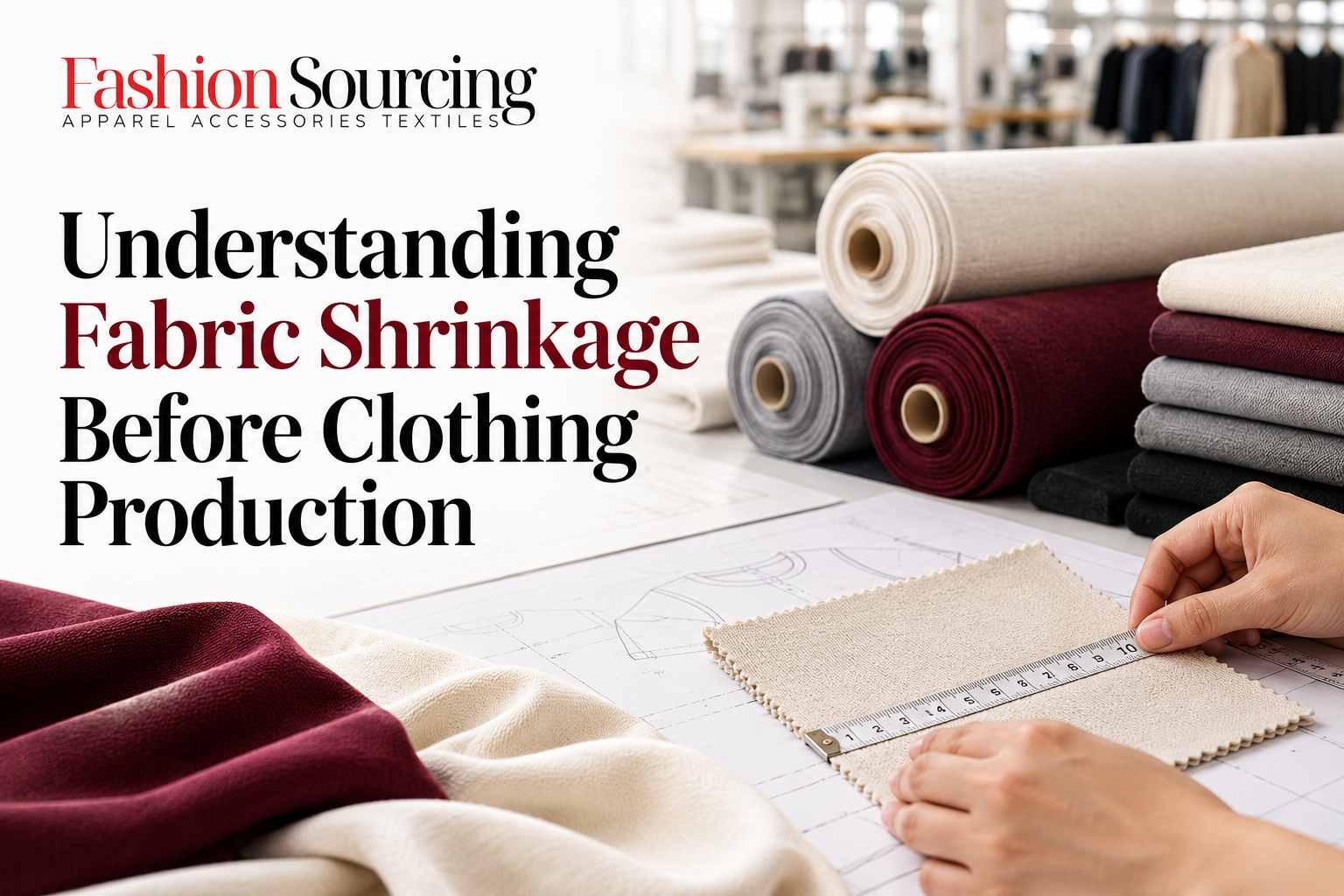
Fabric shrinkage testing is a simple but important step before bulk clothing manufacturing. First, take a fabric sample and record its original length and width. Then, wash and dry it according to the expected care instructions for the finished garment.
After the sample has dried, measure it again and compare the new measurements with the original ones.
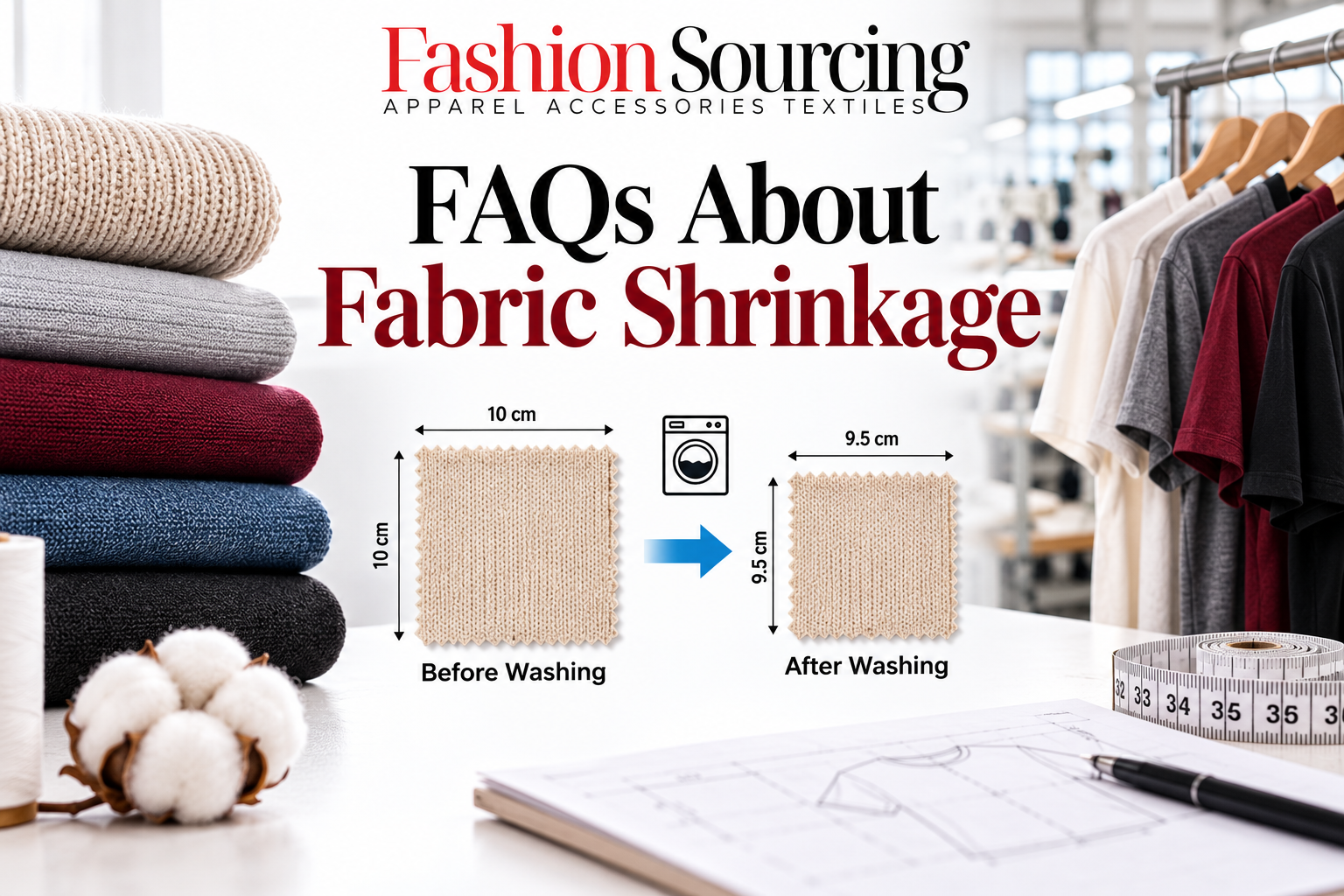
For example, if a fabric sample measures 100 cm before washing and 96 cm afterward, the shrinkage is 4%.
The shrinkage percentage can be calculated using this formula:
Shrinkage (%) = (Original Measurement − Final Measurement) ÷ Original Measurement × 100
Testing fabric before production helps manufacturers make better decisions about fabric selection, garment patterns, and finishing methods.
How to Reduce Fabric Shrinkage in Clothing Production
Manufacturers can reduce unwanted fabric shrinkage by selecting suitable fabrics, using pre-shrunk materials, and applying proper fabric finishing treatments. They should also follow the recommended washing and drying conditions during testing.
Pattern makers may need to allow for expected shrinkage when preparing garment patterns. However, these adjustments should be based on actual test results rather than assumptions.
At Fashion Sourcing, understanding fabric behavior is an important part of planning clothing production. Careful fabric testing and quality checks help clothing brands maintain consistent garment measurements and reduce avoidable production issues.
Why Fabric Shrinkage Matters for Clothing Brands
Fabric shrinkage affects more than garment size. It can lead to customer complaints, product returns, wasted materials, and additional manufacturing costs. For brands producing large quantities of clothing, even a small difference in fabric measurements can affect many finished garments.
By checking fabric shrinkage before bulk production, clothing brands can improve product quality, maintain consistent sizing, and make better use of their manufacturing budget.
Frequently Asked Questions About Fabric Shrinkage
1. What is fabric shrinkage in clothing production?
Fabric shrinkage is the reduction in fabric length or width after washing, drying, steaming, or other treatments. It can change the final size and fit of garments, making shrinkage testing an important step before clothing production.
2. Why is fabric shrinkage testing important before bulk production?
Fabric shrinkage testing helps clothing manufacturers identify possible size changes before producing large quantities. It reduces sizing problems, material waste, production costs, and customer complaints.
3. Which fabrics shrink the most?
Cotton, wool, and some other natural fibers can shrink more than many synthetic fabrics. However, the amount of shrinkage depends on the fabric structure, fiber quality, manufacturing process, and washing conditions.
4. Does 100% cotton fabric shrink after washing?
Yes, 100% cotton fabric can shrink after washing, especially when it has not been pre-shrunk. The amount depends on the fabric construction, finishing treatment, water temperature, and drying method.
5. How do you calculate fabric shrinkage percentage?
Subtract the final measurement from the original measurement, divide the result by the original measurement, and multiply by 100. For example, if fabric length decreases from 100 cm to 96 cm, the shrinkage rate is 4%.
6. What is an acceptable fabric shrinkage percentage?
The acceptable fabric shrinkage percentage depends on the garment type, fabric, customer requirements, and quality standards. A clothing manufacturer should agree on suitable limits with the brand and test the material before bulk production.
7. How can clothing manufacturers prevent fabric shrinkage?
Manufacturers can manage shrinkage by selecting suitable materials, using pre-shrunk fabrics, applying proper finishing treatments, testing samples, and allowing for measured shrinkage during pattern development.
8. What is the difference between lengthwise and widthwise fabric shrinkage?
Lengthwise shrinkage reduces the fabric’s length, while widthwise shrinkage reduces its width. Both can affect garment measurements, so fabric testing should check both directions before production begins.
9. Should fabric shrinkage be tested before making clothing samples?
Yes, testing fabric shrinkage before sample development can help manufacturers prepare more accurate patterns and garment measurements. It can also reduce the need for repeated sample changes before bulk production.
10. How does fabric shrinkage affect clothing quality?
Fabric shrinkage can change garment fit, sleeve length, body length, and overall shape. If manufacturers do not manage it properly, finished clothing may become smaller than expected after washing, leading to customer dissatisfaction and returns.
Stay updated on Fashion Sourcing, apparel manufacturing, and global supply chain trends:
Connect With Fashion Sourcing
- Instagram: @therealfashionsourcing
- Facebook: Fashion Sourcing
- Twitter/X: @therealfas19949
- LinkedIn: Fashion Sourcing
- Pinterest: Fashion Sourcing
- YouTube: @FashionSourcing-e5w
Visit fashion-sourcing.com for all sourcing and procurement needs.
For media & contact inquiries: hello@fashion-sourcing.com