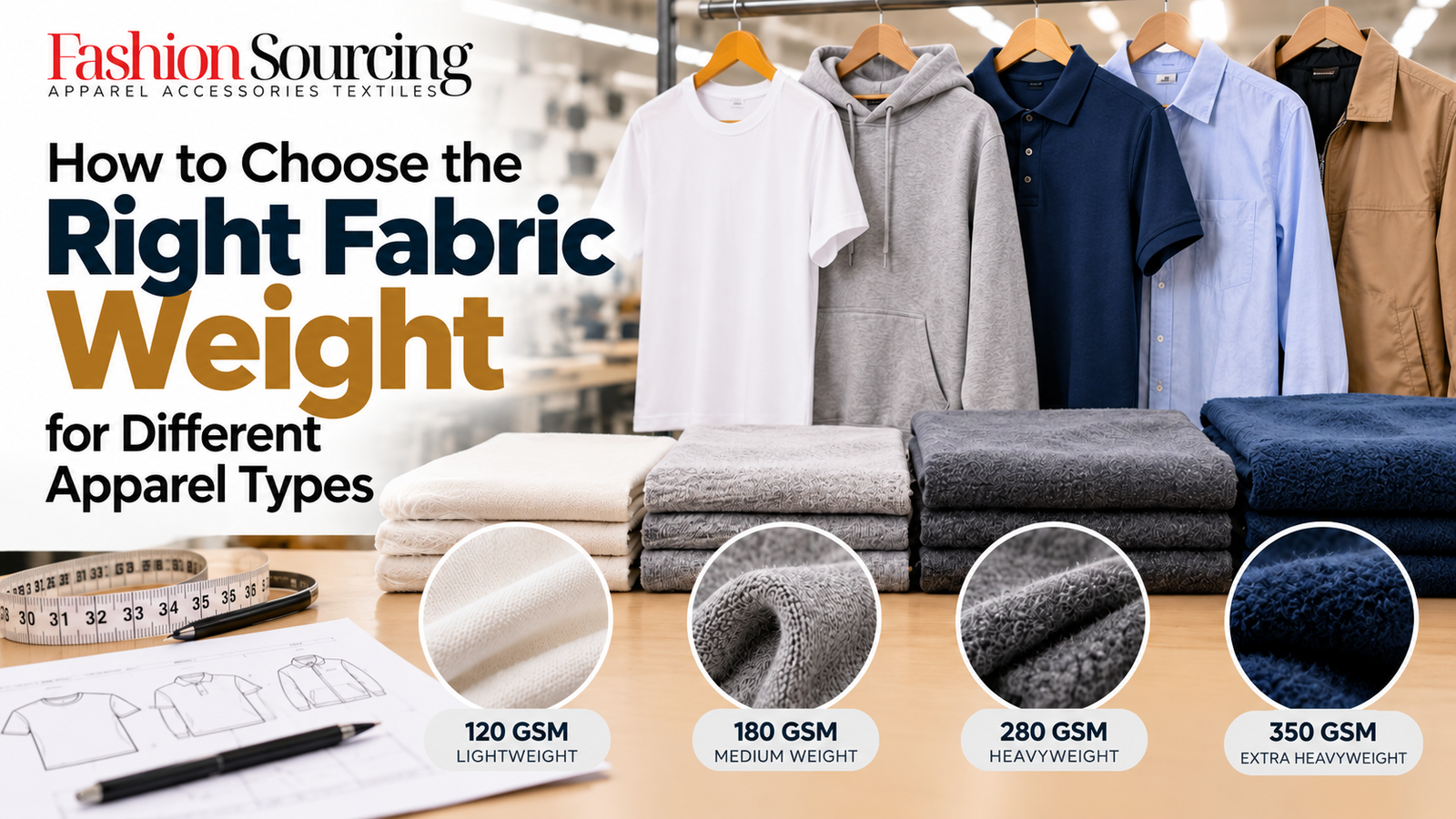
Choosing the right fabric weight is an important step in clothing manufacturing. It affects how a garment feels, looks, fits, and performs during daily use. The right fabric can make a T-shirt comfortable, a hoodie warm, and a jacket strong enough for regular wear. However, choosing the wrong fabric weight can lead to clothing that feels too heavy, too thin, or uncomfortable for the intended purpose.
For clothing brands, fashion designers, and apparel manufacturers, understanding fabric weight helps create better products and meet customer expectations. In this guide, we will explain fabric weight, common GSM ranges, and how to choose the right weight for different types of clothing.
What Is Fabric Weight?
Fabric weight refers to how much a fabric weighs over a specific area. It is usually measured in GSM, which stands for grams per square meter. GSM tells you how many grams one square meter of fabric weighs.
A fabric with a low GSM is generally lighter and thinner, while a fabric with a high GSM is usually heavier and thicker. However, thickness and softness also depend on the type of fiber, yarn, and knitting or weaving method used.
For example, a lightweight cotton fabric may be suitable for summer clothing, while a heavier cotton fleece fabric may work better for winter hoodies and sweatshirts.
Understanding Different Fabric Weight Ranges
Fabric weights can be grouped into three general categories.
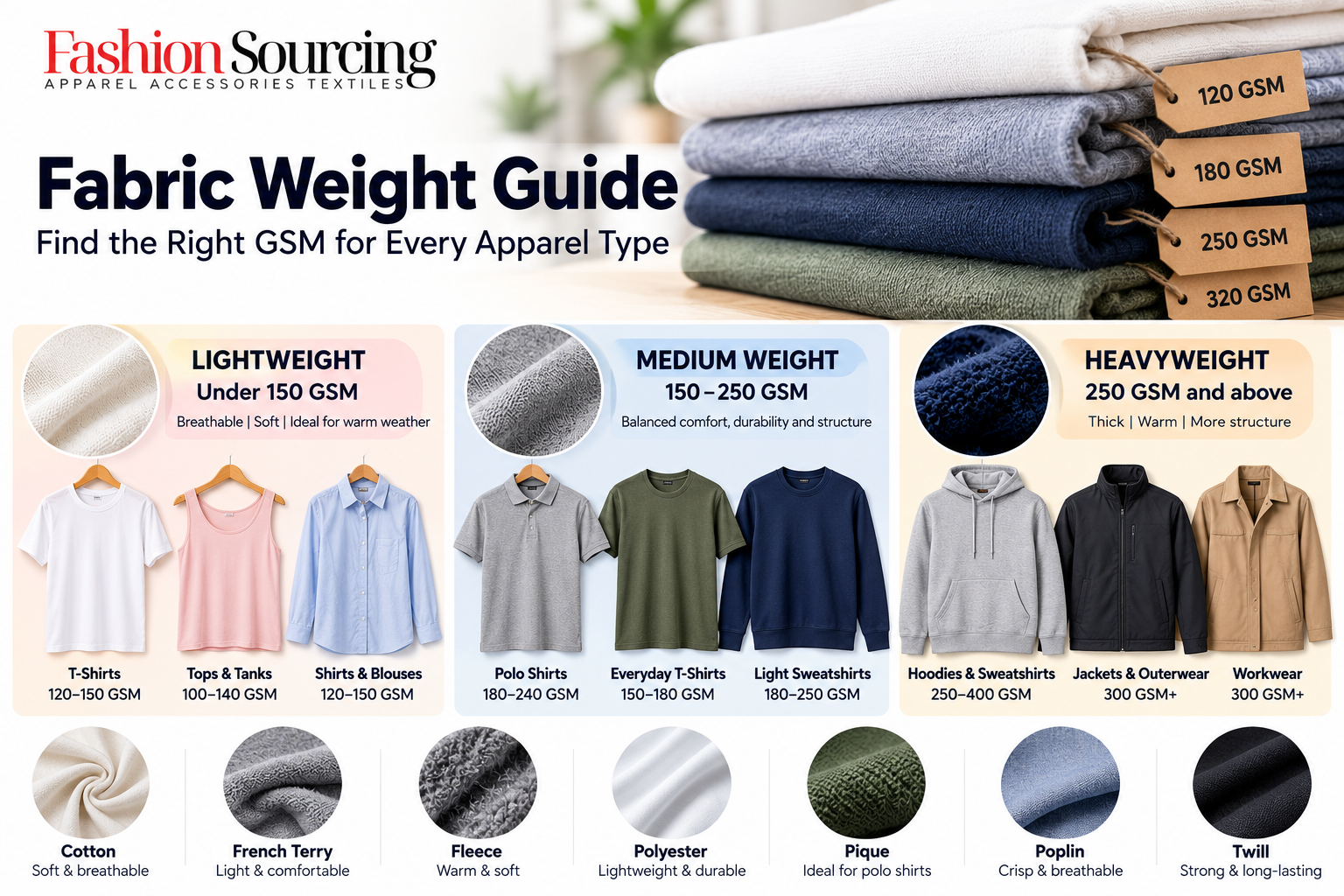
Lightweight fabrics (under 150 GSM): These fabrics are often used for summer T-shirts, lightweight tops, linings, and some shirts. They allow good airflow and can feel comfortable in warm weather.
Medium-weight fabrics (150–250 GSM): These fabrics offer a balance between comfort, durability, and structure. They are commonly used for everyday T-shirts, polo shirts, casual tops, and some lightweight sweatshirts.
Heavyweight fabrics (250 GSM and above): These fabrics are often chosen for premium T-shirts, hoodies, sweatshirts, jackets, and other garments that need more structure or warmth. The best weight depends on the garment design and fabric type.
These ranges are general guidelines. A woven fabric and a knitted fabric with the same GSM may feel very different when worn.
How to Choose Fabric Weight for Different Apparel Types
1. T-Shirts
T-shirts are available in a wide range of fabric weights. Lightweight fabrics around 120–150 GSM can work well for hot weather and promotional T-shirts. Everyday T-shirts often use around 150–180 GSM for a balance of comfort and durability. Premium or heavyweight T-shirts may use 200–260 GSM or more to create a thicker feel and a structured fit.
When selecting fabric for T-shirts, consider the target market, season, fit, and price range. A relaxed-fit streetwear T-shirt may need a heavier fabric than a basic summer T-shirt.
2. Hoodies and Sweatshirts
Hoodies and sweatshirts usually require medium to heavyweight fabrics. Around 250–320 GSM can suit many everyday sweatshirts, while 300–400 GSM or more is often used for heavyweight hoodies.
Cotton fleece provides a soft inner surface and warmth, while French terry has a looped inner surface and can feel lighter and more breathable. The right choice depends on the climate and the desired look.
3. Polo Shirts
Polo shirts commonly use fabrics around 180–240 GSM, especially cotton pique. Lightweight options can work well for warm weather, uniforms, and sportswear, while heavier fabrics may provide a more structured appearance.
Fabric texture, stretch, breathability, and collar quality should also be checked before finalizing the material.
4. Shirts and Blouses
Casual shirts and blouses often use lightweight to medium-weight fabrics, depending on the fiber and design. Cotton poplin, for example, can provide a crisp and breathable feel, while heavier woven cotton may create a more structured shirt.
For summer collections, choose breathable fabrics that feel comfortable against the skin. For formal shirts, focus on the balance between drape, opacity, and shape.
5. Jackets and Outerwear
Jackets may require medium or heavyweight outer fabrics, but the ideal weight depends on the purpose of the garment. Lightweight jackets need flexible fabrics, while workwear jackets may require stronger and heavier materials.
For cold-weather jackets, insulation and lining also affect warmth. A heavy outer fabric alone does not always make a jacket suitable for winter.
6. Sportswear and Activewear
Sportswear often uses lightweight fabrics that help manage sweat and support movement. Polyester blends and stretch fabrics are common choices for gym T-shirts, running tops, and training clothes.
Instead of focusing only on GSM, check moisture management, stretch recovery, airflow, and drying time. A lightweight fabric with the right construction may perform better than a heavier one.
Important Factors to Consider Before Selecting Fabric Weight
Before choosing fabric for your clothing collection, think about the season, target customer, garment design, and selling price. A summer collection may need lighter and more breathable materials, while winter clothing may require heavier fabrics or added insulation.
You should also consider fabric shrinkage, color, opacity, durability, and how the material behaves after washing. Always request fabric samples and test them before starting bulk production.
For clothing brands working with a manufacturing partner, sharing the expected GSM, fabric composition, fit, and intended use helps reduce mistakes during production. A sample garment can also help confirm whether the fabric matches your design requirements.
How Fabric Weight Affects Clothing Quality and Cost
Fabric weight can affect the amount of material used, shipping weight, garment structure, and production cost. Heavier fabrics may require more raw material per garment, which can increase costs. However, a higher GSM does not automatically mean better quality.
Fiber quality, yarn strength, fabric construction, finishing, and stitching all influence the final product. The best fabric weight is the one that meets your garment’s needs while maintaining comfort, durability, and the right price.
Frequently Asked Questions About Fabric Weight
Question 1: What does GSM mean in clothing?
Answer: GSM stands for grams per square meter. It measures the weight of a fabric over one square meter and helps compare different fabric options.
Question 2: What is a good GSM for T-shirts?
Answer: Around 150–180 GSM is a common choice for everyday T-shirts. Lightweight summer styles and heavyweight streetwear designs may need different weights.
Question 3: What GSM is best for hoodies?
Answer: Around 300–400 GSM is popular for heavyweight hoodies, while lighter hoodies may use fabrics around 250–300 GSM.
Question 4: Is higher GSM fabric always better?
Answer: No. Higher GSM means more fabric weight per square meter, but it does not guarantee better quality, softness, or durability.
Question 5: What fabric weight is best for summer clothing?
Answer: Lightweight, breathable fabrics are often suitable for summer. The ideal GSM depends on the fabric type, design, and climate.
Question 6: What GSM is suitable for polo shirts?
Answer: Around 180–240 GSM is a useful starting range for many polo shirts, particularly cotton pique styles.
Question 7: Does fabric weight affect clothing durability?
Answer: It can, but durability also depends on fiber quality, yarn strength, fabric construction, and stitching.
Question 8: What is the difference between fabric weight and thickness?
Answer: Fabric weight measures mass per area, while thickness measures the distance between the fabric’s surfaces. Two fabrics with the same GSM can have different thicknesses.
Question 9: How can I check fabric GSM before production?
Answer: You can use a GSM cutter and a precision weighing scale to measure a fabric sample. A fabric supplier can also provide the stated GSM and a sample for testing.
Question 10: Should clothing brands test fabric before bulk manufacturing?
Answer: Yes. Testing samples for shrinkage, colorfastness, comfort, and durability helps brands check that the selected fabric meets their product requirements.
Stay updated on Fashion Sourcing, apparel manufacturing, and global supply chain trends:
Connect With Fashion Sourcing
- Instagram: @therealfashionsourcing
- Facebook: Fashion Sourcing
- Twitter/X: @therealfas19949
- LinkedIn: Fashion Sourcing
- Pinterest: Fashion Sourcing
- YouTube: @FashionSourcing-e5w
Visit www.fashion-sourcing.com for all sourcing and procurement needs.
For media & contact inquiries: hello@fashion-sourcing.com