When starting a clothing brand, choosing the right manufacturing method is an important step. Two popular options are cut-and-sew manufacturing and private label manufacturing. Both help businesses create clothing products, but they differ in design, production, cost, and the level of control you have over the final product.
Understanding the difference between cut-and-sew and private label manufacturing can help you choose the right option for your business. Whether you want to launch a new fashion brand, expand your clothing line, or create custom apparel, knowing how these methods work can save time and money.
What Is Cut-and-Sew Manufacturing?
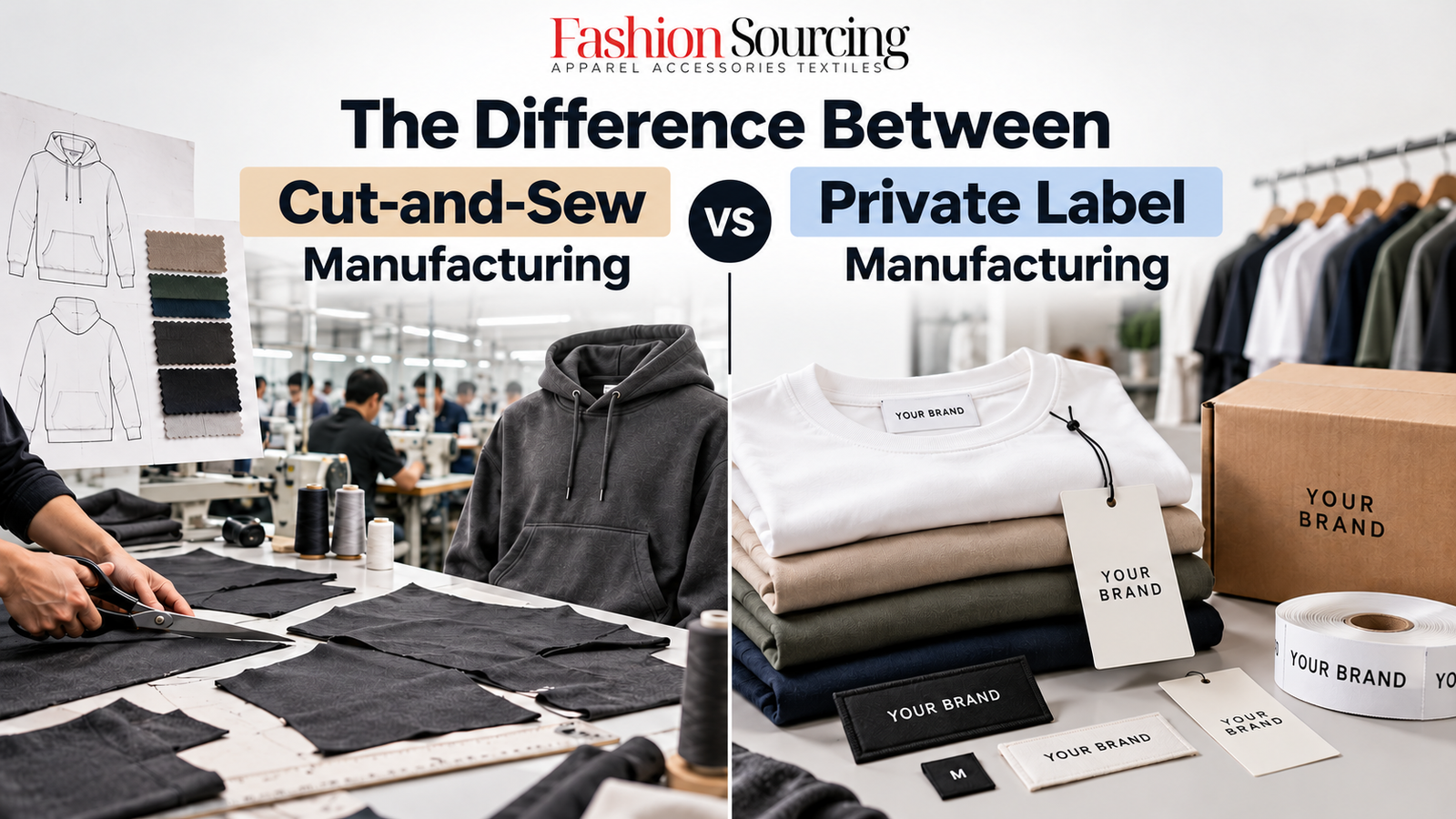
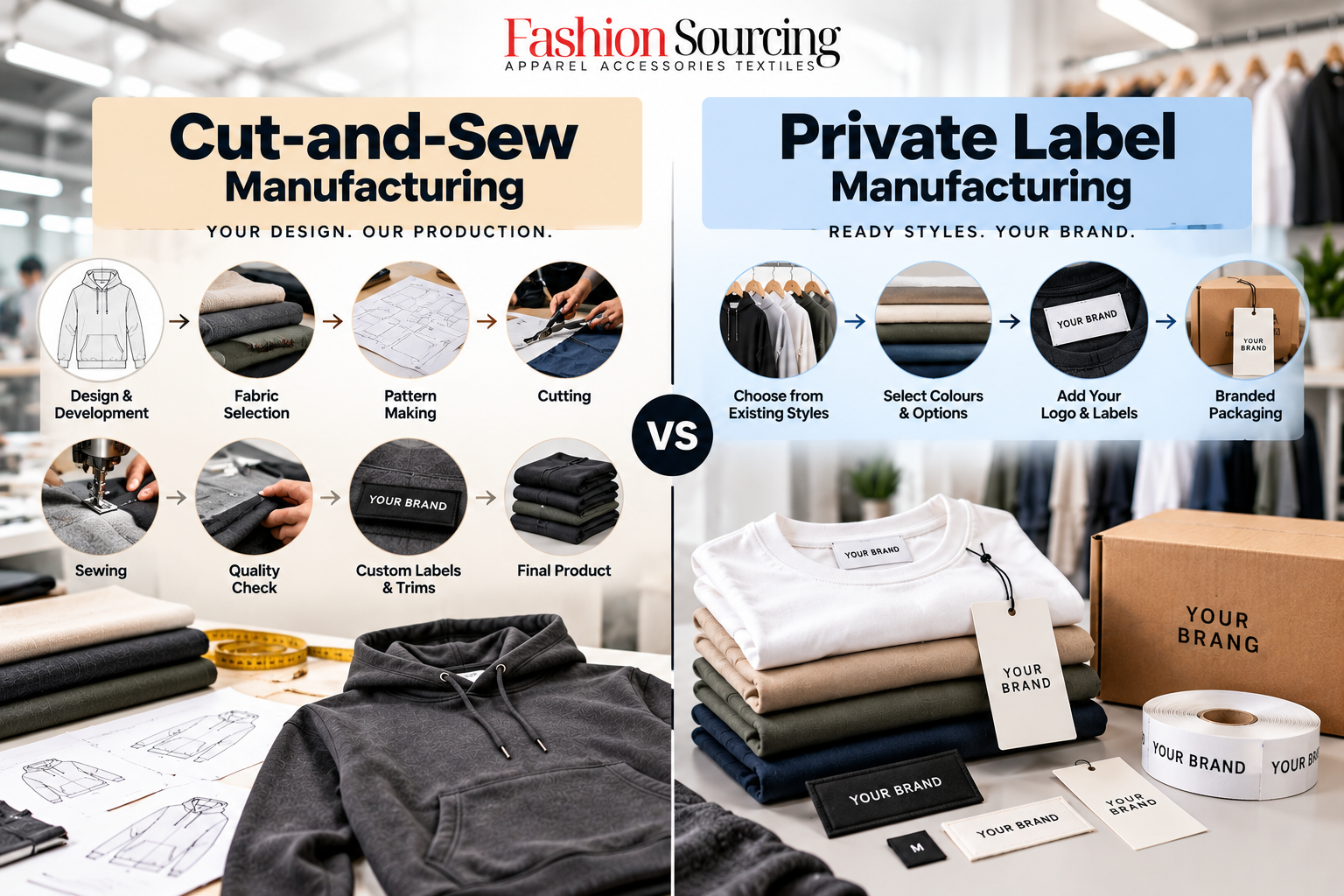
Cut-and-sew manufacturing is a process where clothing is made from fabric according to your own design. The manufacturer starts with raw fabric, cuts it into the required shapes, and sews the pieces together to create the final garment.
This method gives clothing brands more control over the product. You can choose the fabric, color, size, fit, stitching, labels, and other details. For example, if you want to create a unique oversized hoodie with special pockets, custom sleeves, and a specific fabric weight, cut-and-sew manufacturing allows you to build the product according to your needs.
The process usually includes design development, pattern making, fabric selection, sample creation, cutting, sewing, quality checks, and packaging. Since the product is made to match your design, it may require more time and a higher starting budget.
Cut-and-sew manufacturing is a good choice for fashion brands that want unique products and a strong brand identity.
What Is Private Label Manufacturing?
Private label manufacturing allows a business to sell clothing under its own brand name using products made by a manufacturer. In many cases, the manufacturer already has clothing designs or ready-made styles that you can select and customize.
For example, a manufacturer may offer basic T-shirts, sweatshirts, hoodies, or polo shirts. You can choose a suitable style and add your brand logo, custom labels, tags, and packaging.
Private label manufacturing is often easier for new clothing businesses because it reduces the need to develop every product from the beginning. Depending on the supplier, you may also be able to change colors, fabrics, or other product details.
However, the level of customization depends on the manufacturer’s services. Some suppliers offer only logo and label changes, while others allow more changes to the product.
Private label manufacturing is a practical option for businesses that want to launch products faster and build a branded clothing collection with less design work.
Key Differences Between Cut-and-Sew and Private Label Manufacturing
The main difference is the level of product development and customization.
With cut-and-sew manufacturing, you create clothing based on your own designs. With private label manufacturing, you usually select an existing product and sell it under your brand name.
Cut-and-sew often requires more development work, including patterns, samples, and fabric testing. Private label production can be faster because the manufacturer may already have established designs and production methods.
Costs also vary. Cut-and-sew can involve higher development costs, especially for small orders. Private label manufacturing may have lower starting costs, but the final price depends on the product, customization, order quantity, and supplier.
Another difference is product uniqueness. Cut-and-sew gives you more freedom to create a distinctive style. Private label products may be similar to items sold by other brands, particularly when several businesses use the same base design.
Which Manufacturing Method Is Right for Your Clothing Brand?
The best choice depends on your budget, business goals, and product requirements.
If you want to create original designs, control garment construction, and offer products that stand out from competitors, cut-and-sew manufacturing may be the better option.
If you want to start selling clothing quickly, test market demand, or launch a brand without developing every design from scratch, private label manufacturing may be more suitable.
Some businesses use both methods. They begin with private label products to test the market and later introduce custom cut-and-sew collections as their brand grows.
Before choosing a manufacturer, review sample quality, minimum order quantities, production timelines, customization options, and pricing. Clear communication about your requirements can help you avoid unexpected costs and delays.
Working with an experienced clothing manufacturing partner can also make the process easier, whether you need custom garments or branded ready-made products. With the right approach, you can build a clothing collection that fits your budget and meets your customers’ needs.
Frequently Asked Questions
1. What is the main difference between cut-and-sew and private label manufacturing?
Cut-and-sew manufacturing creates garments from fabric based on your design, while private label manufacturing usually involves branding existing or pre-developed products with your own brand name.
2. Is cut-and-sew manufacturing more expensive?
It can be more expensive because it may require custom patterns, samples, design work, and product development. The actual cost depends on the garment and order size.
3. Is private label manufacturing good for startups?
Yes, private label manufacturing can be a good choice for startups because it often requires less product development and helps businesses launch clothing collections faster.
4. Can I customize clothing with private label manufacturing?
Yes. Many manufacturers allow you to add logos, neck labels, hang tags, and custom packaging. Some also offer fabric, color, and fit changes.
5. Which method offers more design freedom?
Cut-and-sew manufacturing generally offers more design freedom because the garment is developed according to your specific requirements.
6. Does cut-and-sew manufacturing require a minimum order quantity?
Most manufacturers have minimum order quantities, but the requirements vary by supplier, garment type, fabric, and production process.
7. Can I use my own logo with both manufacturing methods?
Yes. Both methods can support custom branding, including logos, labels, tags, and packaging, depending on the manufacturer’s services.
8. Which method is faster?
Private label manufacturing is often faster because the base product may already exist. Cut-and-sew production may take longer due to design development, sampling, and custom production.
9. Can private label clothing be unique?
Yes, but uniqueness depends on the level of customization. Adding branding alone may not make the garment unique, while changing its design, fabric, fit, or details can help it stand out.
10. Can a clothing brand use both cut-and-sew and private label manufacturing?
Yes. A brand can use private label products for basic items and cut-and-sew manufacturing for exclusive collections, giving it flexibility in pricing, product variety, and design.
Stay updated on Fashion Sourcing, apparel manufacturing, and global supply chain trends:
Connect With Fashion Sourcing
- Instagram: @therealfashionsourcing
- Facebook: Fashion Sourcing
- Twitter/X: @therealfas19949
- LinkedIn: Fashion Sourcing
- Pinterest: Fashion Sourcing
- YouTube: @FashionSourcing-e5w
Visit www.fashion-sourcing.com for all sourcing and procurement needs.
For media & contact inquiries: hello@fashion-sourcing.com