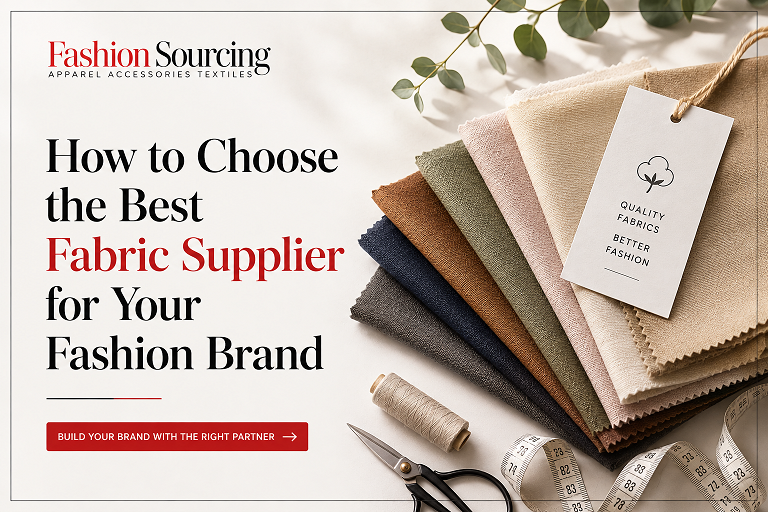
Every great garment starts with fabric. You can have the sharpest design and the best tailoring, but if the material feels cheap or wears out after a few washes, customers will notice — and they won’t come back. That’s why choosing the right fabric supplier is one of the most important decisions a fashion brand makes, often more important than people realize when they’re just starting out.
If you’re currently searching for a supplier or thinking about switching from your current one, here’s a practical guide to help you choose well.
Start with your product, not the supplier list Before reaching out to anyone, get clear on what your brand actually needs. A streetwear label working with heavyweight cotton has very different requirements than a brand making flowy summer dresses. Knowing your fabric type, weight, and finish narrows your search considerably.
Ask for physical swatches, not just photos Fabric looks different in pictures than it feels in your hands. Always request swatches before placing a bulk order. Check the drape, stretch, breathability, and how it holds color. A five-minute swatch check can save you from a costly mistake later.
Check their minimum order quantities Some suppliers only deal in large volumes, which can be tough for small or new labels. Look for suppliers who offer flexible MOQs, especially if you’re still testing designs or building your customer base.
Understand where the fabric comes from Ask about the fiber source and where the fabric is woven or knitted. This matters for quality consistency and also for any sustainability claims you might want to make to customers later.
Look into their production capacity A supplier might be great for a one-time order but unable to keep up once your brand starts scaling. Ask directly how much they can produce monthly and how that changes during busy seasons.
Talk about lead times honestly Fabric delays can throw off your entire production schedule. Get a clear, written estimate of how long orders typically take, including any buffer for delays.
Review their quality control process Ask how they check for defects like uneven dyeing, weak seams in pre-woven fabric, or inconsistent texture across a batch. A supplier with a clear QC process is far less likely to send you unusable stock.
Compare pricing carefully The cheapest option isn’t always the smartest one. Factor in shipping, taxes, and potential fabric waste from poor quality when comparing quotes.
Read reviews or ask for references Talking to other brands who’ve worked with the supplier gives you honest insight that a sales pitch never will.
Finding a reliable supplier takes patience, but it pays off in the long run. Platforms like Fashion Sourcing can make this process easier by connecting brands with pre-vetted fabric suppliers, saving you the time of contacting dozens of vendors individually and hoping for the best.
At the end of the day, your fabric supplier is a long-term partner, not just a one-time transaction. Choose someone who communicates well, delivers consistent quality, and understands your brand’s direction. That relationship will end up shaping the quality of every piece you put into the world.
FAQs — How to Choose the Best Fabric Supplier for Your Fashion Brand
Q1. What should I look for when choosing a fabric supplier for my fashion brand?
When choosing a fabric supplier, look for consistent quality across batches, transparent pricing, reliable lead times, and a willingness to provide fabric samples before bulk orders. Certifications like GOTS, OEKO-TEX, or bluesign are strong indicators of a supplier’s commitment to quality and sustainability standards.
Q2. How do I verify the quality of a fabric supplier before placing a bulk order?
Always request fabric swatches or sample yardage before committing to a bulk purchase. Test the samples for shrinkage, colorfastness, pilling resistance, and tensile strength. A trustworthy supplier will welcome this process and provide consistent results across every sample request.
Q3. Should I work with domestic or overseas fabric suppliers?
Both options have their advantages. Domestic suppliers offer shorter lead times, easier communication, lower minimum order quantities, and stronger quality oversight. Overseas suppliers may offer lower per-unit costs but come with longer shipping timelines, higher minimum orders, and more complex logistics. The right choice depends on your brand’s budget, production volume, and delivery requirements.
Q4. What is a minimum order quantity (MOQ) and how does it affect fabric sourcing?
A minimum order quantity is the smallest amount of fabric a supplier will sell in a single order. MOQs vary widely between suppliers — some require hundreds of meters while others are flexible for smaller brands. Understanding MOQ requirements early in your sourcing process is essential for budgeting accurately and avoiding overcommitment on materials you may not fully use.
Q5. How important are sustainability certifications when choosing a fabric supplier?
Sustainability certifications are increasingly important — both for ethical reasons and commercial ones. Certifications like GOTS (Global Organic Textile Standard), OEKO-TEX Standard 100, and bluesign verify that a supplier meets specific environmental and safety standards. Many retailers and wholesale buyers now require certified fabrics as a condition of stocking a brand’s products, making certification a genuine business asset.
Q6. How many fabric suppliers should a fashion brand work with?
Most emerging brands benefit from working with two to three core fabric suppliers rather than spreading across too many vendors. Having a primary supplier and one or two backups for key materials protects you against stock shortages and production delays while keeping your supplier relationships manageable and your quality standards consistent.
Q7. What information should I provide to a fabric supplier when making an enquiry?
When reaching out to a fabric supplier, be prepared to share your fabric requirements in detail — fiber content, weight (GSM), construction type (woven or knit), color references (Pantone numbers), required width, estimated order quantity, and your target delivery date. The more specific your enquiry, the faster and more accurate the supplier’s response will be.
Q8. How do I build a long-term relationship with a fabric supplier?
Building a strong supplier relationship starts with clear communication, timely payments, and consistent order volumes. Share your seasonal production calendar in advance so suppliers can plan capacity for your orders. Give honest feedback on samples and be transparent about your brand’s growth plans. Suppliers who see long-term potential in a brand partnership will often prioritize your orders, offer better pricing, and go the extra mile when urgent situations arise.
Stay updated on Fashion Sourcing, apparel manufacturing, and global supply chain trends:
Connect With Fashion Sourcing
- Instagram: @therealfashionsourcing
- Facebook: Fashion Sourcing
- Twitter/X: @therealfas19949
- LinkedIn: Fashion Sourcing
- Pinterest: Fashion Sourcing
- YouTube: @FashionSourcing-e5w
Visit www.fashion-sourcing.com for all sourcing and procurement needs.
For media & contact inquiries: hello@fashion-sourcing.com