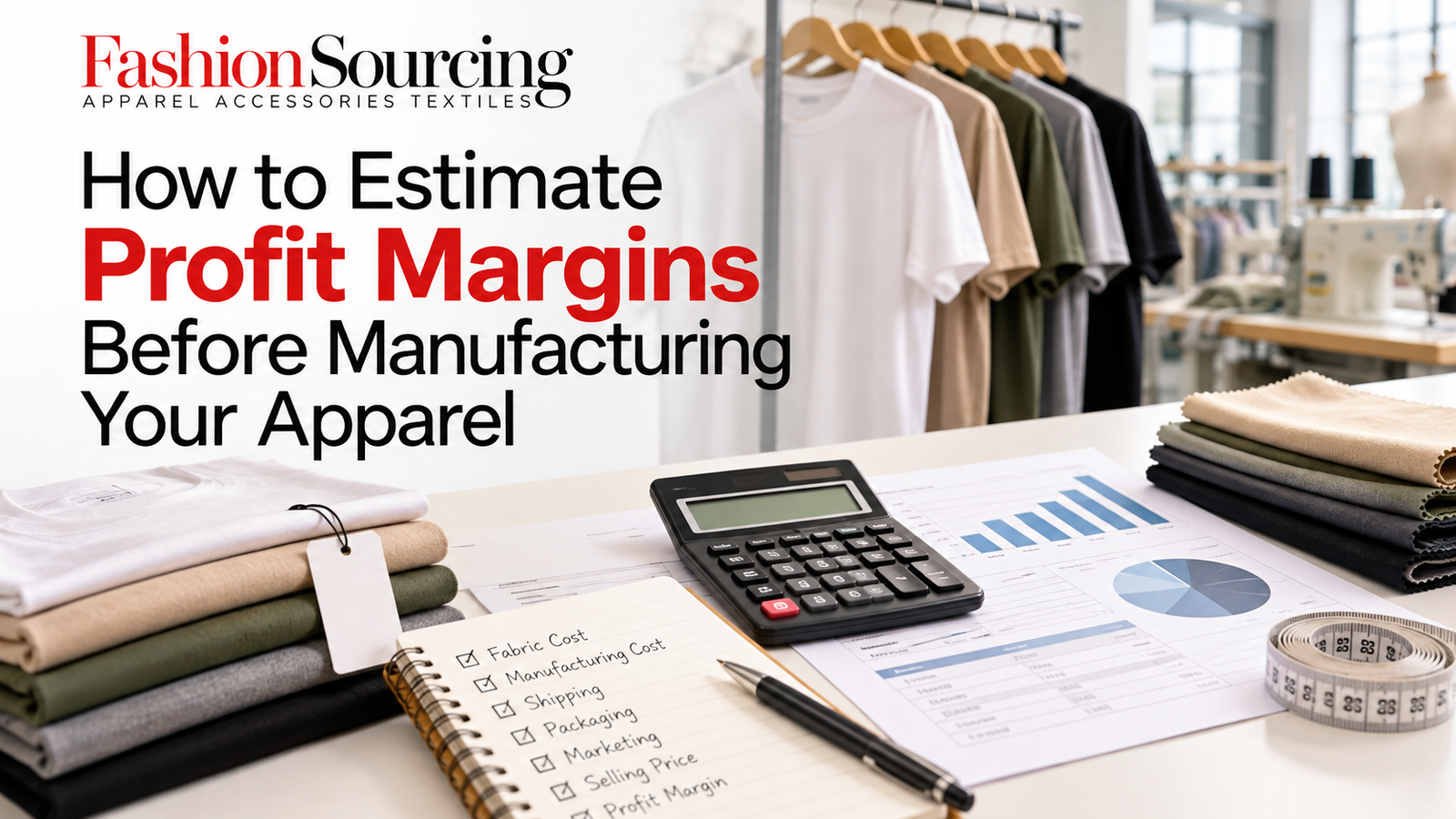
Starting a clothing brand is exciting, but making a profit requires careful planning. Before you begin manufacturing apparel, you need to understand how much each product will cost and how much you can earn from every sale. A good profit margin helps you cover your business expenses, manage risks, and grow your clothing brand over time.
Whether you are launching a T-shirt brand, a streetwear label, an activewear line, or a sustainable clothing business, estimating your profit margins before production can help you make better decisions.
1. Calculate the Total Manufacturing Cost
The first step is to calculate the full cost of making each garment. Do not focus only on the price quoted by your clothing manufacturer. There may be several additional costs that affect your final profit.
Your manufacturing cost may include fabric, buttons, zippers, labels, printing, embroidery, stitching, cutting, and packaging. If you need custom designs or special materials, these can increase the total cost.
For example, if manufacturing one T-shirt costs $6, including fabric, stitching, printing, and packaging, your basic production cost is $6 per unit.
Always ask your apparel manufacturer for a detailed cost breakdown before confirming your order.
2. Include Shipping and Other Expenses
Your costs do not stop when the garments are ready. You may also need to pay for shipping, import duties, quality checks, storage, and delivery to your customers.
For example, if your T-shirt costs $6 to manufacture and another $2 for shipping and other product-related expenses, your total cost becomes $8 per unit.
You should also consider business expenses such as website hosting, marketing, payment processing fees, and customer service. These expenses can reduce your final profit, even when your products sell well.
Keep a record of both product costs and general business expenses to understand your actual earnings.
3. Set a Selling Price Based on Your Costs
Once you know your total cost, you can decide how much to charge customers. Your selling price should cover your expenses while leaving enough profit to support your business.
For example, if your total cost per T-shirt is $8 and you sell it for $20, your gross profit is $12 per shirt.
However, charging a higher price does not always mean you will earn more. You should also consider your target customers, product quality, competitor prices, and the value your brand offers.
Research similar clothing brands to understand what customers are willing to pay.
4. Understand the Difference Between Markup and Profit Margin
Markup and profit margin are related, but they are not the same.
Profit margin shows the percentage of your selling price that remains as profit before other expenses not included in the calculation.
Markup shows how much you add to your cost to set the selling price.
Use these formulas:
Gross Profit = Selling Price − Cost of Goods Sold
Gross Profit Margin = (Gross Profit ÷ Selling Price) × 100
For example, if a T-shirt sells for $20 and costs $8 to produce and prepare for sale, your gross profit is $12.
Your gross profit margin is ($12 ÷ $20) × 100 = 60%.
Your markup is ($12 ÷ $8) × 100 = 150%.
Understanding this difference helps you set prices more accurately.
5. Account for Marketing and Sales Fees
If you sell apparel through an online store, marketplace, or social media, you may need to spend money to attract customers.
For example, if you spend $3 per sale on advertising and pay $1 in payment processing fees, your remaining profit on the $20 T-shirt falls from $12 to $8.
This means your gross profit margin after these additional selling costs is 40%, before other business expenses and taxes.
Estimate your marketing costs before launching your collection. This will help you decide whether your planned selling price is enough to support profitable sales.
6. Compare Different Manufacturing Quantities
The number of garments you order can affect your cost per unit. Many apparel manufacturers offer lower prices for larger orders because production costs can be spread across more items.
For example, producing 100 T-shirts may cost $8 per unit, while producing 500 T-shirts may reduce the unit cost to $6.50.
However, ordering more clothing also requires a larger upfront investment and creates a risk of unsold stock.
Ask your clothing manufacturer for quotes at different order quantities. Compare the savings with the extra money you need to invest and the number of products you realistically expect to sell.
7. Calculate Your Break-Even Point
Your break-even point tells you how many products you need to sell to cover your fixed business expenses.
For example, if your monthly fixed costs are $1,000 and each T-shirt contributes $10 toward those costs after variable expenses, you need to sell 100 T-shirts to break even.
Break-Even Units = Fixed Costs ÷ Contribution per Unit
This calculation helps you set realistic sales targets before investing in a clothing collection.
8. Review Your Profit Margin Before Production
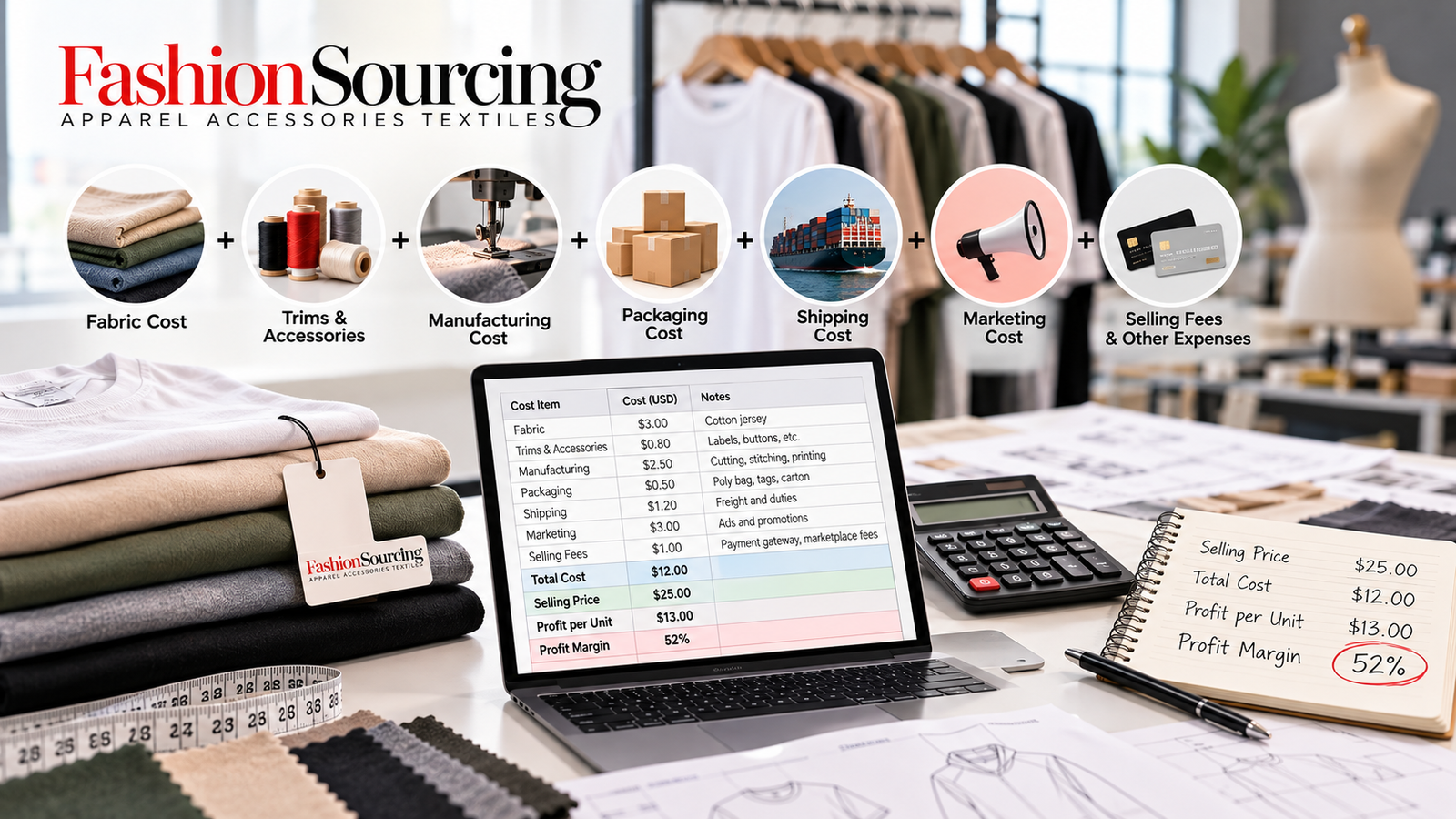
Before approving your apparel order, review your complete cost sheet. Include manufacturing, shipping, packaging, marketing, selling fees, and any other expected expenses.
Create different pricing scenarios to see what happens if production costs rise, advertising becomes more expensive, or sales are lower than expected.
Working with a reliable clothing manufacturing partner can also help you understand material choices, minimum order quantities, production costs, and ways to manage your budget.
When you know your expected costs and margins before manufacturing begins, you can price your apparel with greater confidence and make smarter decisions for your clothing brand.
1. How do I calculate profit margins for a clothing brand?
Subtract the total cost of goods sold from the selling price, divide the profit by the selling price, and multiply by 100 to get the gross profit margin percentage.
2. What costs should I include before manufacturing apparel?
Include fabric, cutting, stitching, printing, embroidery, labels, packaging, shipping, quality checks, and other costs related to preparing the products for sale.
3. What is a good profit margin for a clothing brand?
A suitable margin depends on your product type, business model, market, and operating costs. Plan for enough margin to cover marketing, sales fees, overhead, and unexpected expenses.
4. What is the difference between gross profit and net profit in apparel manufacturing?
Gross profit is the revenue remaining after subtracting the cost of goods sold. Net profit is what remains after all business expenses, including operating costs, marketing, and applicable taxes, are accounted for.
5. How does manufacturing quantity affect apparel profit margins?
Larger orders may reduce the cost per garment, but they require more upfront money and can increase the risk of unsold inventory.
6. How should I price my clothing products?
Calculate your full product costs, include selling expenses, research competitor prices, and consider what your target customers are willing to pay.
7. What is the difference between markup and profit margin?
Markup measures profit as a percentage of cost, while profit margin measures profit as a percentage of the selling price.
8. How do shipping costs affect clothing profit margins?
Shipping, import duties, and delivery fees increase the total cost of selling apparel. If these costs are not included in your pricing, your actual profit may be lower than expected.
9. How can I reduce apparel manufacturing costs without lowering quality?
Compare manufacturer quotes, select suitable fabrics, reduce unnecessary design complexity, plan production quantities carefully, and avoid costly errors by approving samples before bulk production.
10. Why should I estimate profit margins before placing an apparel manufacturing order?
Estimating profit margins helps you set suitable prices, plan your budget, choose the right order quantity, reduce financial risks, and understand how many products you need to sell to make your clothing business profitable.