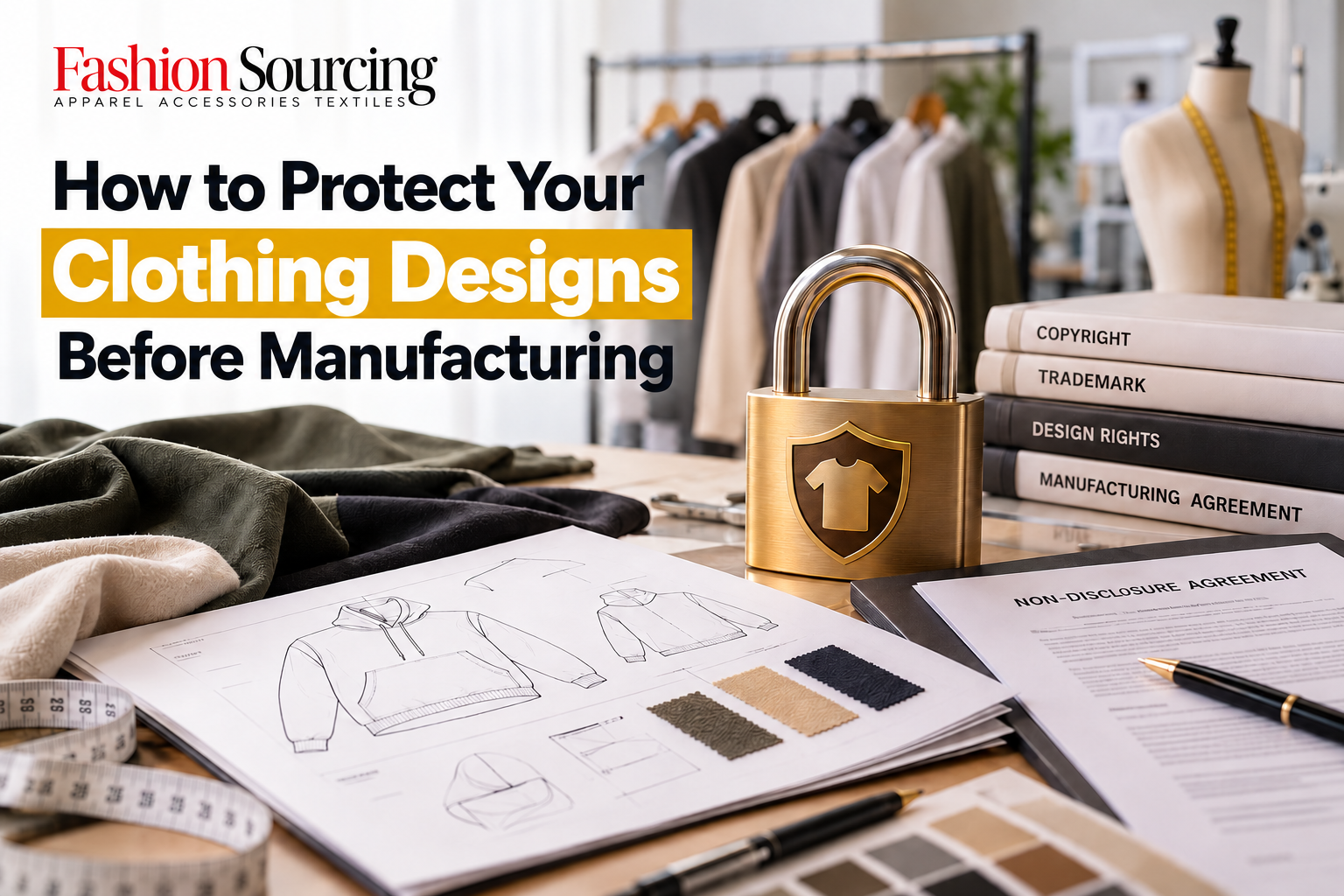
Starting a clothing brand is exciting, but protecting your designs before manufacturing is an important step. Whether you are launching a streetwear brand, creating custom clothing, or building a fashion business, you need to make sure your ideas are safe before sharing them with manufacturers and suppliers.
Many clothing brands work with different manufacturers to produce their products. During this process, design files, fabric details, patterns, and product samples may be shared with other people. Without proper protection, your designs could be copied or used without your permission.
In this guide, we will explain how to protect your clothing designs before manufacturing and reduce the risk of someone copying your ideas.
1. Keep Your Design Files Private
Before contacting a clothing manufacturer, keep your design files private and share them only with people who need them. These files may include sketches, technical drawings, tech packs, measurements, fabric choices, color details, and logo designs.
Avoid sharing complete design files publicly on social media or websites before you are ready to launch your collection. If you need to show your designs to potential manufacturing partners, share only the information required for the discussion.
You can also add your brand name, logo, or a confidential watermark to design documents. This will not stop every type of copying, but it can help identify the owner of the files.
2. Use a Non-Disclosure Agreement (NDA)
A Non-Disclosure Agreement (NDA) is a legal agreement that helps protect confidential information shared with another person or business.
Before sharing your new clothing designs with a manufacturer, you can ask them to sign an NDA. The agreement can explain what information must remain private and how it can be used.
For example, an NDA may cover your unreleased designs, product samples, fabric details, and production plans. It can also explain what happens if the other party shares your confidential information without permission.
Make sure the agreement fits your business needs and the laws that apply to your situation. For important projects, consider asking a legal professional to review it.
3. Understand Copyright and Design Protection
Copyright and design rights can help protect different parts of your clothing collection, depending on the country and the type of design.
Copyright may protect original artwork, fabric prints, graphics, and certain creative elements used on clothing. However, it does not automatically protect every clothing shape or functional feature.
In some countries, registered design rights can protect the visual appearance of a garment, including its shape, pattern, or decoration. The rules and requirements vary by location.
If you have created a unique clothing design, check the available protection options before showing it publicly. In some places, publishing your design before applying for protection may affect your ability to register it.
4. Protect Your Brand Name and Logo
Your clothing designs are important, but your brand identity also needs protection. A brand name or logo helps customers recognize your products and distinguish them from competitors.
Consider registering a trademark for your brand name and logo in the markets where you plan to sell. Before applying, check whether another business already uses a similar name for related products.
Trademark protection can help prevent other businesses from using confusingly similar brand names or logos. It does not usually protect the actual clothing design, so you may need different types of protection for different parts of your business.
5. Choose a Trusted Clothing Manufacturer
Choosing the right clothing manufacturer is another important step in protecting your designs. Before placing an order, research the company’s background, experience, production process, and communication practices.
Ask how the manufacturer handles confidential files, product samples, and design information. Find out whether your products will be made only for your brand and whether any subcontractors will have access to your designs.
Your manufacturing agreement should clearly explain ownership of designs, patterns, tech packs, samples, and other materials. It should also state whether the manufacturer can produce or sell similar products for other customers.
Do not rely only on verbal promises. Keep important terms in writing.
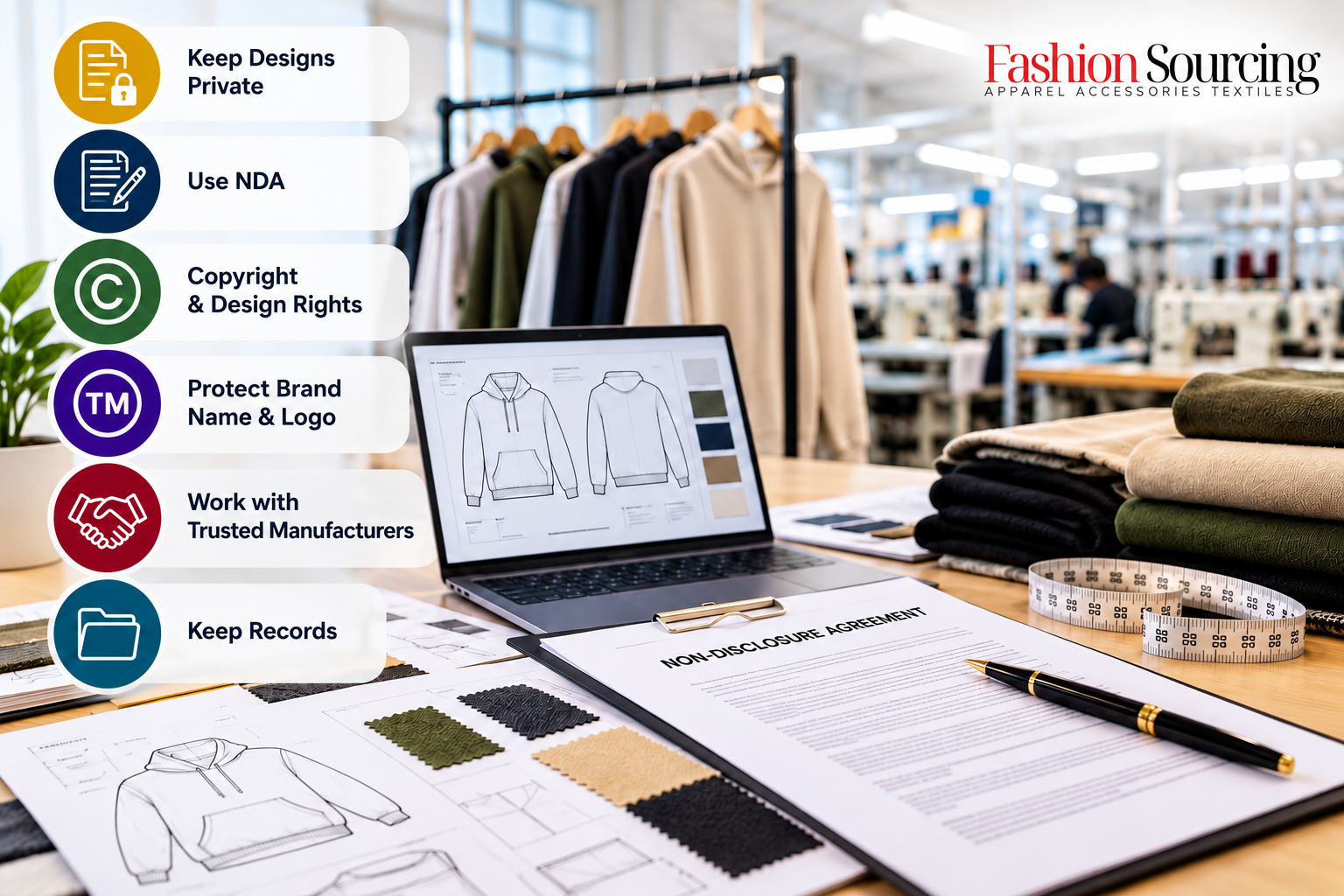
6. Keep Records of Your Original Designs
Maintain clear records showing how and when your clothing designs were created. Save original sketches, dated design files, tech packs, sample photographs, emails, and communication with manufacturers.
These records may help demonstrate your creative process and support a claim if a dispute arises. However, keeping records alone does not create every type of legal protection.
Use organized folders and secure backups to keep your files safe. Limit access to sensitive documents and update your records whenever you make major design changes.
7. Share Only What Is Necessary Before Production
You do not always need to share your entire collection with a manufacturer at the beginning. Start by discussing your requirements and sharing the information needed to assess the project.
Once you have selected a suitable manufacturing partner and agreed on confidentiality and ownership terms, provide the detailed tech pack and production files required to make your garments.
This approach helps you manage who can access your designs while keeping the manufacturing process organized.
Protecting your clothing designs before manufacturing is an important part of building a successful fashion brand. By keeping design files private, using suitable agreements, understanding your legal rights, protecting your brand name, and choosing a reliable clothing manufacturer, you can reduce the risk of copying and misuse.
If you are planning to launch a new clothing collection, take these steps before sending your designs into production. A little preparation can help protect your creative work and give your brand a stronger start.
Fashion Sourcing can help clothing brands connect with manufacturing solutions for their apparel production needs. Planning your designs carefully and working with the right manufacturing partner can make the journey from concept to finished product more organized and secure.
Frequently Asked Questions (FAQs)
1. How can I protect my clothing designs before manufacturing?
Answer : You can protect your clothing designs by keeping design files private, using a Non-Disclosure Agreement (NDA), checking copyright and design registration options, and signing a clear manufacturing agreement. Keep dated records of your sketches, tech packs, and samples to help prove ownership.
2. Can a clothing manufacturer steal my designs?
Answer : Yes, design copying is possible when working with any business, but the risk can be reduced. Choose a trusted clothing manufacturer, agree on confidentiality terms, and clearly define design ownership in a written contract before sharing sensitive files.
3. Should I sign an NDA with a clothing manufacturer?
Answer : Signing a Non-Disclosure Agreement (NDA) can help protect confidential information, such as unreleased designs, product samples, and manufacturing details. Before signing, make sure the agreement clearly explains what information is confidential and how it can be used.
4. Can I copyright my clothing designs?
Answer : Copyright may protect original artwork, graphics, fabric prints, and other creative elements used in clothing. However, copyright does not automatically protect every garment shape or functional feature. Protection depends on the design and the laws of the country where you seek protection.
5. How do I register a clothing design legally?
Answer : The process depends on your country. In some countries, you can apply for registered design protection to protect the visual appearance of a garment. You may need to provide images or drawings of the design and submit an application before publicly revealing it.
6. How can I protect my clothing brand name and logo?
Answer : You can consider registering your brand name and logo as trademarks in the countries where you plan to sell. Before applying, search for similar existing trademarks. Trademark protection helps protect your brand identity but does not automatically protect your clothing designs.
7. Is a tech pack confidential when sending it to a manufacturer?
Answer : A tech pack can contain confidential information, including garment measurements, fabric details, construction methods, artwork, and production instructions. Share it only with trusted partners, use appropriate confidentiality agreements, and limit access to the information when possible.
8. What should a clothing manufacturing contract include to protect my designs?
Answer : A manufacturing contract should explain who owns the designs, patterns, tech packs, and samples. It should also cover confidentiality, permitted use of design files, restrictions on unauthorized production, subcontractor access, and what happens when the agreement ends.
9. Can I send my clothing designs to a manufacturer before registering them?
Answer : You may be able to, but it is important to understand the risks first. Some design rights may be affected if you publicly disclose a design before applying for registration. Consider your protection options and use confidentiality agreements before sharing valuable, unreleased designs.
10. How can Fashion Sourcing help me manufacture clothing safely?
Answer : Fashion Sourcing helps clothing brands explore apparel manufacturing solutions for their collections. Before starting production, brands should prepare clear tech packs, discuss confidentiality requirements, confirm design ownership in writing, and select suitable manufacturing partners to support a more secure production process.