When most people think about building a fashion brand, they focus on the big picture — the silhouettes, the fabrics, the overall aesthetic. But experienced designers and brand founders know that it’s often the smallest details that make the biggest impression. Buttons, zippers, labels, hang tags, drawcords, buckles, rivets, and trims are not afterthoughts. They are the finishing touches that communicate quality, reinforce brand identity, and determine whether a customer picks up your product or puts it back on the rack. Learning how to source accessories for fashion products effectively is one of the most important operational skills any brand can develop.
Understanding What Fashion Accessories Actually Cover
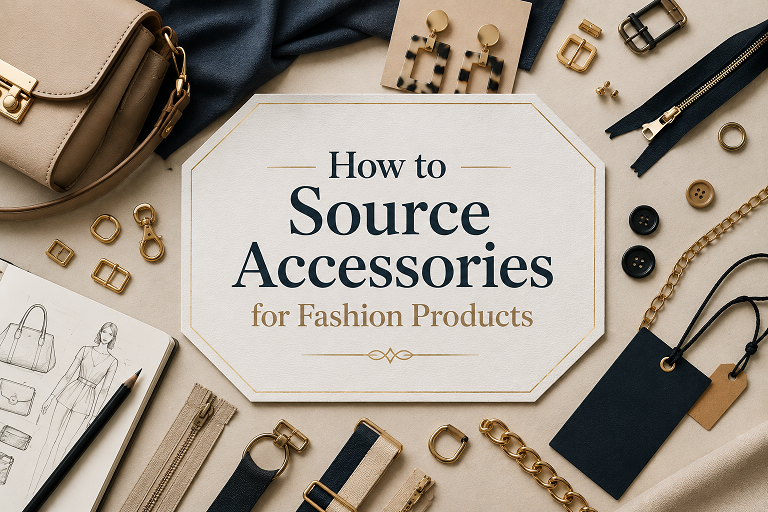
In garment manufacturing, the term “accessories” refers to everything attached to or packaged with a garment that isn’t the main fabric. This includes functional components like zippers, buttons, snaps, hooks, and elastic — as well as branding elements like woven labels, heat transfer tags, hang tags, poly bags, and tissue paper. Trims such as lace, embroidery patches, drawcords, and eyelets also fall into this category. Each of these elements needs to be sourced, approved, and delivered to your manufacturer before or during production, which means accessories sourcing requires its own dedicated planning timeline separate from your fabric procurement.
Start With a Detailed Trim and Accessories List
Before you reach out to a single supplier, sit down with your tech packs and create a comprehensive trim sheet. This document lists every accessory required for each garment in your collection — including the exact specifications for color, material, size, finish, and placement. A button, for example, needs a specified diameter, number of holes, material (shell, metal, resin, or corozo), and color reference. Without this level of detail, suppliers cannot give you accurate quotes and samples will come back wrong. The more thorough your trim sheet, the smoother your sourcing process will be.
Where to Source Fashion Accessories in the USA
The United States has a well-developed network of accessory and trim suppliers serving fashion brands of every size. Trade shows like Texworld USA and the LA Textile Show are excellent places to meet vendors face to face, touch samples, and establish relationships with multiple suppliers in a single trip. Online directories and sourcing platforms have also made it easier to discover domestic vendors for everything from custom woven labels to specialty hardware.
For brands that want a more streamlined approach, working directly with a Fashion Accessories Manufacturer USA offers a significant advantage. Rather than managing five or six separate vendor relationships for different trim categories, a full-service accessories manufacturer can consolidate your sourcing under one roof — simplifying communication, reducing lead times, and making quality control far more manageable.
Balancing Quality, Cost, and Lead Time
Accessory sourcing always involves a balancing act between three variables: quality, cost, and lead time. Premium hardware made from solid brass will cost more and take longer to produce than zinc alloy alternatives, but it will also photograph better, feel more substantial in a customer’s hand, and last significantly longer. The right balance depends on your brand’s positioning and price point. Budget brands can get away with cost-effective trims if they’re well chosen and consistently applied. Premium and luxury brands, however, need accessories that match the quality level of their fabrics and construction — because discerning customers notice when they don’t.
Lead times for custom accessories are often longer than brands expect. Custom woven labels, branded metal hardware, and printed hang tags can take anywhere from three to six weeks to produce, and that timeline needs to be factored into your overall production schedule. Ordering accessories too late is one of the most common reasons production runs get delayed, so build in buffer time and always confirm lead times before finalizing your calendar.
The Importance of Sampling and Approval
Never approve accessories based on digital images or spec sheets alone. Always request physical samples before placing your full accessory order. Check that colors match your pantone references accurately, that metal finishes are consistent across pieces, that labels read correctly and are printed on the right material, and that functional components like zippers and buttons operate smoothly. Keep an approved sample set on file so that your manufacturer has a physical reference standard to work from during production.
Brands working with a Branded Apparel Accessories Manufacturer that offers in-house sampling capabilities can move through this approval process much faster, since adjustments can be made quickly without the delays of international shipping or third-party sample rooms.
Building Long-Term Supplier Relationships
The most efficient accessories sourcing programs are built on long-term supplier relationships rather than one-off transactions. When a supplier knows your brand, understands your quality standards, and has your approved specs on file, reordering becomes faster, easier, and more consistent. Treat your accessories vendors as partners in your production process — communicate clearly, pay on time, and give constructive feedback when samples miss the mark. These relationships compound in value over time and give your brand a meaningful operational edge as you scale.
Sourcing accessories well is ultimately about attention to detail, advance planning, and finding the right partners who share your commitment to quality. Get these foundations right and every garment your brand produces will reflect it.
Stay updated on Fashion Sourcing, apparel manufacturing, and global supply chain trends:
Connect With Fashion Sourcing
- Instagram: @therealfashionsourcing
- Facebook: Fashion Sourcing
- Twitter/X: @therealfas19949
- LinkedIn: Fashion Sourcing
- Pinterest: Fashion Sourcing
- YouTube: @FashionSourcing-e5w
Visit www.fashion-sourcing.com for all sourcing and procurement needs.
For media & contact inquiries: hello@fashion-sourcing.com