When it comes to garment construction, the stitch type you choose is just as important as the fabric you select or the design you create. Stitching is what holds everything together – literally – and the wrong stitch on the wrong garment can mean poor durability, uncomfortable wear, or a product that falls apart after a few washes. For fashion brands, designers, and manufacturers alike, understanding which stitch works best for different garment types is a foundational skill that directly impacts product quality, production efficiency, and customer satisfaction.
Why Stitch Selection Matters More Than You Think
Most consumers never think about the stitches holding their clothes together — until something goes wrong. A seam that pops during wear, a hem that unravels after washing, or a neckline that loses its stretch are all signs of mismatched stitch-to-fabric pairings. For brands, these kinds of quality failures are costly. They lead to returns, negative reviews, and damage to your reputation. Getting stitch selection right from the start is one of the simplest ways to elevate your product quality without adding significant cost to your production process.
The Lockstitch — The Most Versatile Option
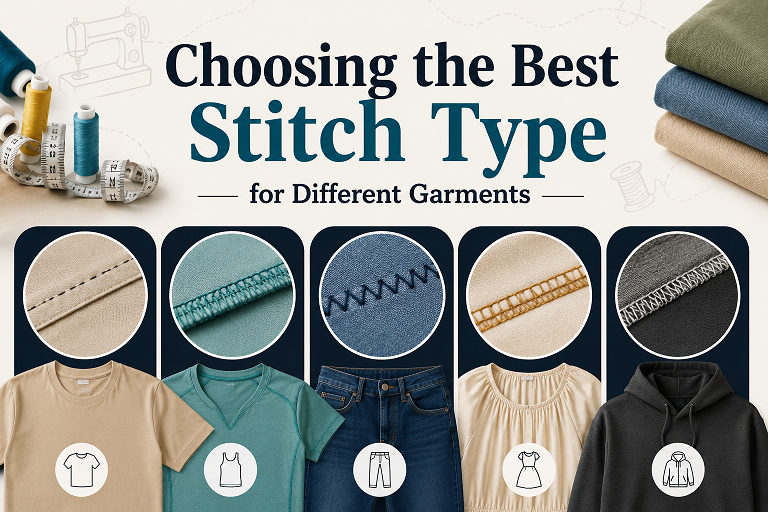
The lockstitch is the most widely used stitch type in garment manufacturing, and for good reason. It creates a tight, secure seam by interlocking two threads — one from the top and one from the bobbin — producing a stitch that is strong, flat, and resistant to unraveling. Lockstitches are ideal for woven fabrics like denim, cotton poplin, canvas, and linen. You’ll find them used extensively in jeans, dress shirts, tailored jackets, and structured trousers. Because the lockstitch doesn’t have much stretch, it’s best suited for garments that don’t require significant elasticity.
The Chainstitch — Speed and Strength for Heavier Garments
The chainstitch uses a single thread looped through itself to create a chain-like formation on the underside of the fabric. It’s faster to produce than a lockstitch and is commonly used in denim manufacturing, particularly for the inseams of jeans, where its characteristic ripple effect — visible after washing — has become a signature detail in premium denim. Chainstitches are also used in heavy outerwear and workwear applications. One important consideration: if the thread end is not properly secured, a chainstitch can unravel quickly, so finishing is critical.
The Overlock Stitch – Essential for Knits and Stretch Fabrics
If you’re working with knit fabrics – jersey, ribbing, interlock, or stretch blends — the overlock stitch is indispensable. Also known as a serger stitch, it wraps around the edge of the fabric to prevent fraying while simultaneously joining two pieces together. Overlock stitches have built-in elasticity, which means they move with the fabric rather than breaking under tension. This makes them the go-to choice for T-shirts, leggings, activewear, underwear, and any garment that needs to stretch and recover. Most knitwear you own is held together almost entirely with overlock stitching.
The Coverstitch — The Professional Finish for Hems
The cover stitch is what separates professionally manufactured knitwear from homemade alternatives. It creates two parallel rows of stitching on the top of the fabric and a looped overlock on the underside, resulting in a hem that is both secure and stretchy. You’ll find cover stitching on the hems of T-shirts, the waistbands of athletic shorts, and the cuffs of sweatshirts. It lies flat against the skin, has excellent stretch recovery, and gives garments a clean, retail-ready appearance. For any brand producing knitwear or activewear at scale, cover stitch capability is a must-have in your manufacturing partner.
Matching Stitch Type to Fabric – A Practical Approach
The relationship between stitch type and fabric is not arbitrary — it follows the physical properties of the material. Woven fabrics with little to no stretch pair best with lockstitches and chainstitches. Stretch knits require overlock and cover stitch construction. Technical fabrics used in outdoor or performance wear may need flatlock stitching, which lies completely flat and reduces chafing against the skin. Delicate fabrics like silk or chiffon need fine, lightweight stitches that won’t distort the material or show through on the right side.
This is where working with experienced partners becomes invaluable. A knowledgeable textile sourcing services USA partner doesn’t just help you find the right fabrics – they understand how different materials behave in production and can guide your stitch and construction choices accordingly, saving you costly sampling mistakes.
The Role of Sustainable Fabrics in Stitch Selection
As more brands shift toward eco-friendly materials, stitch selection becomes even more nuanced. Organic cotton, recycled polyester, bamboo jersey, and TENCEL all have distinct structural properties that affect how they’re best sewn. Some sustainable fabrics are more prone to fraying, others have higher stretch ratios, and some require lower-heat settings that influence thread choice and stitch tension. Partnering with a sustainable fabric sourcing company that has hands-on experience with these materials ensures you’re getting guidance that goes beyond just the fabric itself — covering how it will behave throughout the entire manufacturing process.
Choosing the right stitch type is one of those behind-the-scenes decisions that quietly defines the quality of your brand. It affects how your garments look, how long they last, how comfortable they feel, and how efficiently they can be produced. Whether you’re launching your first collection or refining an existing line, taking the time to match your stitch construction to your fabric and garment type is an investment that pays off in every unit you sell.
Stay updated on Fashion Sourcing, apparel manufacturing, and global supply chain trends:
Connect With Fashion Sourcing
- Instagram: @therealfashionsourcing
- Facebook: Fashion Sourcing
- Twitter/X: @therealfas19949
- LinkedIn: Fashion Sourcing
- Pinterest: Fashion Sourcing
- YouTube: @FashionSourcing-e5w
Visit www.fashion-sourcing.com for all sourcing and procurement needs.
For media & contact inquiries: hello@fashion-sourcing.com